Aniline → 3,3-Dianilino-1-(2,6-dichloro-5-fluoro-3-pyridinyl)-2-propen-1-one
HRID 2214990
Reaktionsgleichung

Cl[C:2](Cl)=[CH:3][C:4]([C:6]1[C:7]([Cl:14])=[N:8][C:9]([Cl:13])=[C:10]([F:12])[CH:11]=1)=[O:5].[NH2:16][C:17]1[CH:22]=[CH:21][CH:20]=[CH:19][CH:18]=1>O1CCOCC1>[NH:16]([C:2]([NH:16][C:17]1[CH:22]=[CH:21][CH:20]=[CH:19][CH:18]=1)=[CH:3][C:4]([C:6]1[C:7]([Cl:14])=[N:8][C:9]([Cl:13])=[C:10]([F:12])[CH:11]=1)=[O:5])[C:17]1[CH:22]=[CH:21][CH:20]=[CH:19][CH:18]=1Komponenten
4
Edukt 2
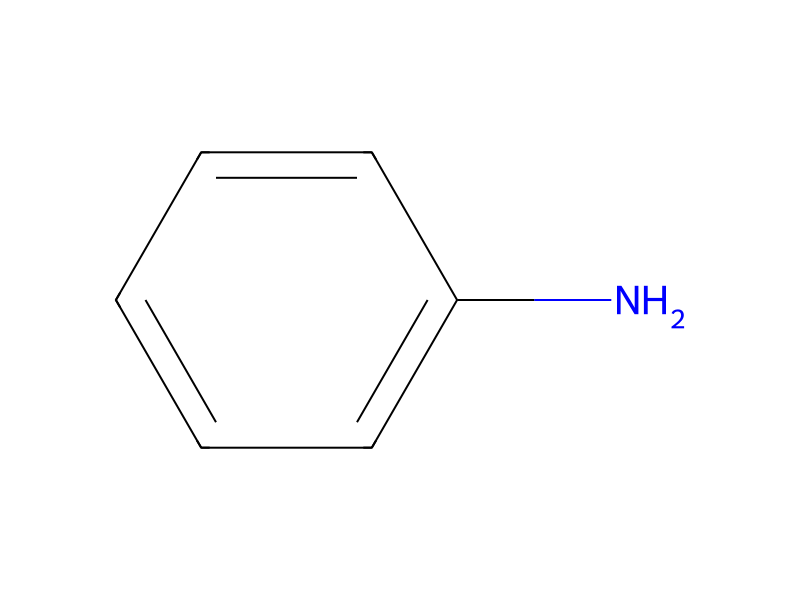

Produkt 1

Reagenzien, Katalysatoren, Lösungsmittel 1

Versuchsvorschrift
To a 0° C. solution of 3,3-dichloro-1-(2,6-dichloro-5-fluoro-3-pyridinyl)-2-propen-1-one (6.70 g, 23.2 mmol) in dioxane (50 mL) was added TEA (9.7 mL, 69.6) followed by aniline (6.3 mL, 69.6 mmol). After I h the reaction was allowed to warm to room temperature and was stirred overnight. The mixture was concentrated in vacuo until most of the solvent was removed and then the residue was diluted with water and extracted with CH2Cl2 (2×). The combined organic extracts were washed with water, dried over Na2SO4 and concentrated in vacuo. Purification of the residue by silica gel Biotage chromatography provided 3,3-dianilino-1-(2,6-dichloro-5-fluoro-3-pyridinyl)-2-propen-1-one as yellow solid (4.2 g, 49%): LCMS RT: 3.47 min; MH+: 402.6.