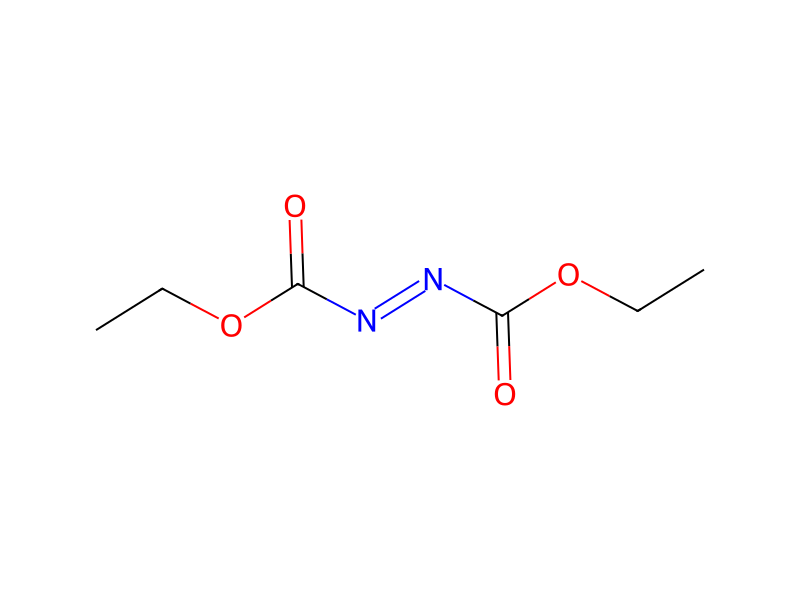
[OH:1][CH2:2][C:3]#[C:4][C:5]1[C:10]([CH3:11])=[CH:9][CH:8]=[CH:7][C:6]=1[CH2:12][O:13][C:14](=[O:20])[C:15]([CH3:19])([CH3:18])[CH2:16][CH3:17].[CH3:21][O:22][C:23](=[O:33])[C:24]([C:26]1[CH:31]=[CH:30][C:29](O)=[CH:28][CH:27]=1)=[O:25].C1(P(C2C=CC=CC=2)C2C=CC=CC=2)C=CC=CC=1.N(C(OCC)=O)=NC(OCC)=O>O1CCCC1>[CH3:21][O:22][C:23](=[O:33])[C:24](=[O:25])[C:26]1[CH:27]=[CH:28][C:29]([O:1][CH2:2][C:3]#[C:4][C:5]2[C:10]([CH3:11])=[CH:9][CH:8]=[CH:7][C:6]=2[CH2:12][O:13][C:14](=[O:20])[C:15]([CH3:19])([CH3:18])[CH2:16][CH3:17])=[CH:30][CH:31]=1A stirred solution of 2,2-dimethylbutanoic acid [2-(3-hydroxy-1-propynyl)-3-methylphenyl]methyl ester (1.05 g), 4-hydroxyphenylglyoxylic acid methyl ester (0.693 g) and triphenylphosphine (1.26 g) in tetrahydrofuran (30 mL) was cooled to 0° C., and a solution of diethyl azodicarboxylate (0.76 mL) in tetrahydrofuran (5 mL) was added over 5 minutes. The reaction mixture was stirred at 0° C. for 1 hour then at room temperature overnight. The solvent was evaporated and the residue triturated with diethyl ether to remove most of the triphenylphosphine oxide. The filtrate was concentrated in vacuo and the resulting oil was chromatographed over silica gel (10 g; diethyl ether-hexane; 1:19) to furnish 1.4 g of 4-[3-[2-[(2,2-dimethyl-1-oxobutoxy) methyl]-6-methylphenyl]-2-propynyloxy]-alpha-oxobenzeneacetic acid methyl ester as a colorless oil.