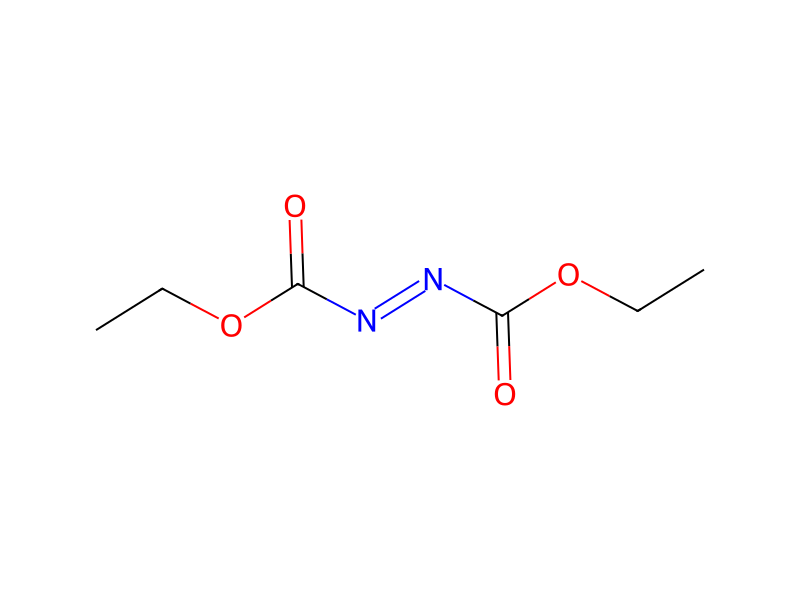
N(C(OCC)=O)=NC(OCC)=O.[Cl:13][C:14]1[CH:33]=[CH:32][C:17]([NH:18][C:19]2[C:28]3[C:23](=[CH:24][C:25]([OH:31])=[C:26]([O:29][CH3:30])[CH:27]=3)[N:22]=[CH:21][N:20]=2)=[C:16]([F:34])[CH:15]=1.C1(P(C2C=CC=CC=2)C2C=CC=CC=2)C=CC=CC=1.[O:54]1[CH2:59][CH2:58][N:57]([CH2:60][CH2:61][O:62][CH2:63][CH2:64]O)[CH2:56][CH2:55]1>C(Cl)Cl>[ClH:13].[Cl:13][C:14]1[CH:33]=[CH:32][C:17]([NH:18][C:19]2[C:28]3[C:23](=[CH:24][C:25]([O:31][CH2:64][CH2:63][O:62][CH2:61][CH2:60][N:57]4[CH2:58][CH2:59][O:54][CH2:55][CH2:56]4)=[C:26]([O:29][CH3:30])[CH:27]=3)[N:22]=[CH:21][N:20]=2)=[C:16]([F:34])[CH:15]=1Diethyl azodicarboxylate (209 mg, 1.2 mmol) was added dropwise to a mixture of 4-(4-chloro-2-fluoroanilino)-7-hydroxy-6 methoxyquinazoline (128 mg, 0.4 mmol), (prepared as described for the starting material in Example 2), triphenylphosphine (314 mg, 1.2 mmol) and 2-(2-morpholinoethoxy)ethanol (97 mg, 0.56 mmol) in methylene chloride (4 ml) under nitrogen. The mixture was stirs for 1 hour at ambient temperature, triphenylphosphine (105 mg, 0.4 mmol), 2-(2-morpholinoethoxy)ethanol (49 mg, 0.28 mmol) and diethyl azodicarboxylate (70 mg, 0.4 mmol) were added. The mixture was stirred for 1 hour at ambient temperature and was purified by pouring directly onto a silica column eluting with methylene chloride/acetonitrile/methanol (6/3/1). The purified product was triturated with ether, collected by filtration and dissolved in methylene chloride. 2M Ethereal hydrogen chloride (0.5 ml) was added and the resulting precipitate was collected by filtration, washed with ether and dried under vacuum to give 4-(4-chloro-2-fluoroanilino)-6-methoxy-7-(2-(2-morpholinoethoxy)ethoxy)quinazoline hydrochloride (100 mg, 45%).