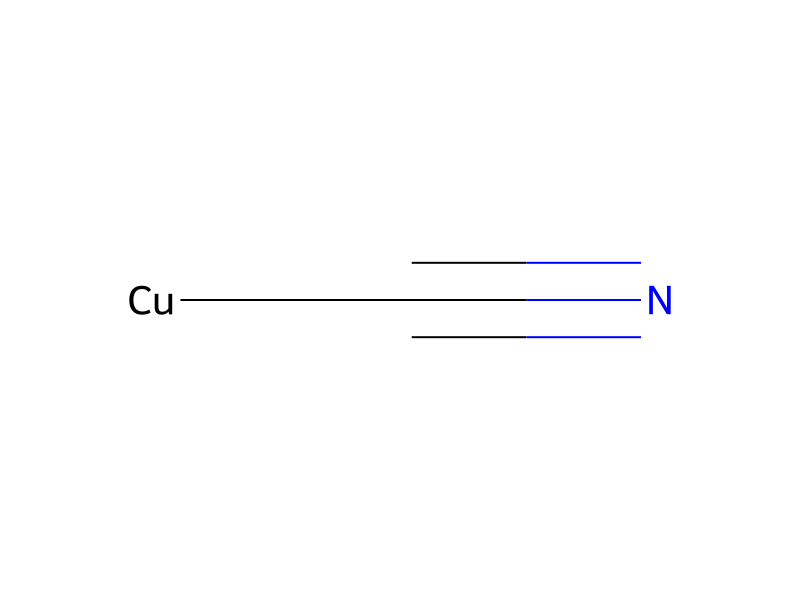
A solution of 1-bromo-4-fluoro-2-methoxy-5-methyl-benzene (5.0 g, 22.8 mmol) in DMF (100 mL, 0.2 M) was treated with CuCN (4.7 g, 52.5 mmol). Equipped with a reflux condenser, the reaction was heated to 160° C. for 20 h. After cooling to room temperature, the solution was poured into a 2 L Erlenmeyer flask. Ethyl acetate (400 mL), saturated aq LiCl (100 mL), 1N HCl (100 mL), 11 g of iron (III) chloride hexahydrate, and 15 mL of concd HCl was added to the solution. This green mixture was heated at 70° C. for 2 h (or until emulsion dissipated). After cooling to room temperature, the mixture was poured into a separatory funnel and extracted with ethyl acetate (600 mL total). The combined organics were washed with 1N HCl (200 mL)), saturated aq LiCl (2×200 mL)), and saturated aq NaCl (100 mL). The organic layer was dried over Na2SO4, filtered, and concentrated under reduced pressure. The resulting powder was dissolved in ethyl acetate (50 mL) and washed with saturated aq LiCl (3×30 mL), dried over Na2SO4, filtered, and concentrated under reduced to afford 4-fluoro-2-methoxy-5-methyl-benzonitrile (3.25 g, 86%) as a beige powder: mp 99-101° C.; R, 0.53 (30% ethyl acetate in heptane); 1H NMR (CDCl3, 300 MHz) δ 7.39 (d, J=8.1 Hz, 1H), 6.65 (d, J=11.1 Hz, 1H), 3.89 (d, J=0.9 Hz, 3H), 2.21 (s, 3H); Anal. calcd for C9H8FNO: C, 65.45; H, 4.88. Found C, 65.17; H. 4.97.