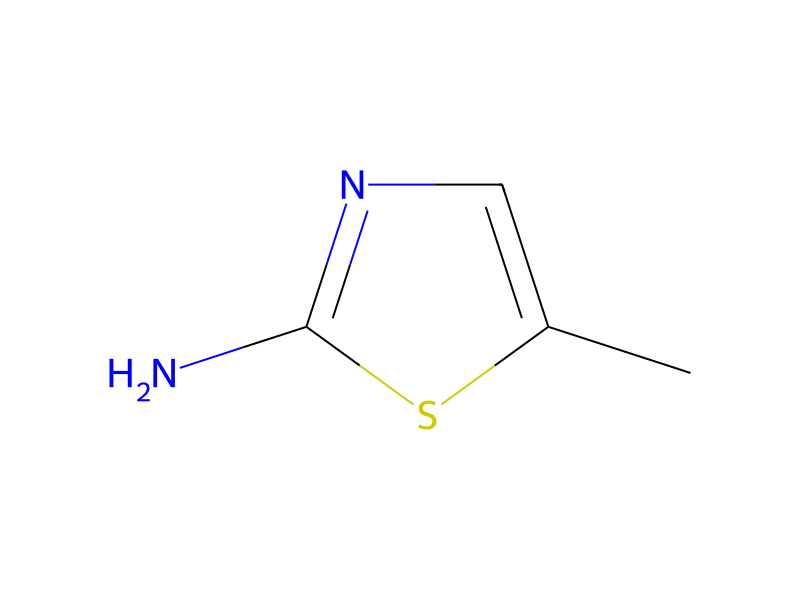
2-Amino-5-methylthiazole → 2,6-Dimethyl-4-hydroxy-N-(5-methyl-2-thiazolyl)-2H-1,2-benzothiazine-3-carboxamide-1,1-dioxide
HRID 224599
Reaktionsgleichung

[OH:1][C:2]1[C:7]2[CH:8]=[C:9]([CH3:12])[CH:10]=[CH:11][C:6]=2[S:5](=[O:14])(=[O:13])[N:4]([CH3:15])[C:3]=1[C:16]([O:18]C)=O.[NH2:20][C:21]1[S:22][C:23]([CH3:26])=[CH:24][N:25]=1>C1(C)C(C)=CC=CC=1>[CH3:15][N:4]1[C:3]([C:16]([NH:20][C:21]2[S:22][C:23]([CH3:26])=[CH:24][N:25]=2)=[O:18])=[C:2]([OH:1])[C:7]2[CH:8]=[C:9]([CH3:12])[CH:10]=[CH:11][C:6]=2[S:5]1(=[O:13])=[O:14]Komponenten
4
Edukt 2

Produkt 1

Reagenzien, Katalysatoren, Lösungsmittel 1

Versuchsvorschrift
4.0 gm (14 millimols) of methyl 4-hydroxy-2,6-dimethyl-2H-1,2-benzothiazine-3-carboxylate-1,1-dioxide and 2.0 gm (17 millimols) of 2-amino-5-methyl-thiazole were refluxed in 200 ml of anhydrous xylene for 24 hours. After cooling, the crystals which had separated out were filtered off. After recrystallization from ethylene chloride 3.6 gm (70% of theory) of 2,6-dimethyl-4-hydroxy-N-(5-methyl-2-thiazolyl)-2H-1,2-benzothiazine-3carboxamide-1,1-dioxide were obtained.