StartseiteMCPWorkbenchSkills
StartseiteWorkbenchBenachrichtigungenMein Bereich
llms.txt · MCP-AnleitungDatenschutz · Nutzungsbedingungen · Supportv1.8.0
  1. Startseite
  2. /Reaktion

2,2'-Bipyridine → Methyl 5-[methyl(ethylsulfonyl)amino]-8-{[(4-methylphenyl)sulfonyl]oxy}-1,6-naphthyridine-7-carboxylate

HRID 2252820
Notizen
Druckvorschau

Reaktionsgleichung

Reaktionsgleichung von HRID 2252820
Br[C:2]1[N:11]=[C:10]([C:12]([O:14][CH3:15])=[O:13])[C:9]([O:16][S:17]([C:20]2[CH:25]=[CH:24][C:23]([CH3:26])=[CH:22][CH:21]=2)(=[O:19])=[O:18])=[C:8]2[C:3]=1[CH:4]=[CH:5][CH:6]=[N:7]2.[CH3:27][NH:28][S:29]([CH2:32][CH3:33])(=[O:31])=[O:30].N1C=CC=CC=1C1C=CC=CN=1>[Cu-]=O.CN(C=O)C>[CH2:32]([S:29]([N:28]([CH3:27])[C:2]1[N:11]=[C:10]([C:12]([O:14][CH3:15])=[O:13])[C:9]([O:16][S:17]([C:20]2[CH:25]=[CH:24][C:23]([CH3:26])=[CH:22][CH:21]=2)(=[O:19])=[O:18])=[C:8]2[C:3]=1[CH:4]=[CH:5][CH:6]=[N:7]2)(=[O:31])=[O:30])[CH3:33]
KomponentenReaktionsbedingungenVersuchsvorschriftAufarbeitungQuellen und NachweiseNotizen zur Reaktion

Komponenten

6

Edukt 3

HCID 14742,2'-BipyridineHCID 11105495N-methylethane-1-sulfonamideHCID 11339571Methyl 5-bromo-8-(tosyloxy)-1,6-naphthyridine-7-carboxylate

Produkt 1

HCID 59645226Methyl 5-[methyl(ethylsulfonyl)amino]-8-{[(4-methylphenyl)sulfonyl]oxy}-1,6-naphthyridine-7-carboxylate

Reagenzien, Katalysatoren, Lösungsmittel 2

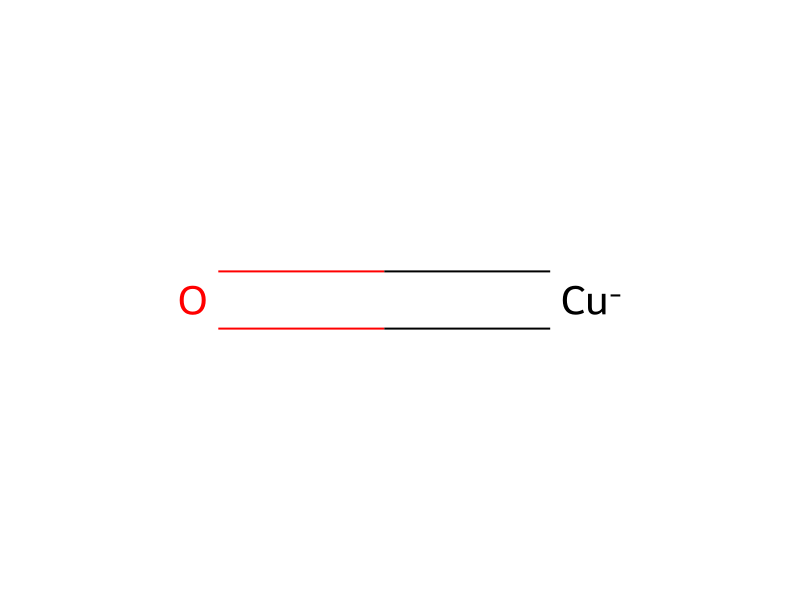
HCID 178419072
HCID 178419072, Verbindung
Katalysator
HCID 6228DimethylformamideLösungsmittel

Reaktionsbedingungen

Temperatur
118 °C

Versuchsvorschrift

In a dried sealable pressure tube flushed with argon was placed methyl 5-bromo-8-{[(4-methylphenyl)sulfonyl]oxy}-1,6-naphthyridine-7-carboxylate (2.0 g, 4.57 mmol), prepared as described in Example 2, Step 2), N-methylethanesulfonamide (1.13 g, 9.15 mmol), dry DMF (4 mL) and copper(I) oxide (785 mg, 5.49 mmol) and 2,2′ bipyridyl (857 mg, 5.49 mmol). The tube was capped and heated to 118° C. for 2 hours. The reaction was cooled and filtered through a glass fiber filter, washing with chloroform. The filtrate was diluted with chloroform (about 100 mL total volume) and stirred with an EDTA solution (5 g EDTA in 100 mL water) for two hours or until the aqueous layer became aqua in color and the organic layer became yellow. The layers were separated and the aqueous layer was extracted twice more with chloroform. The combined organic extracts were dried over sodium sulfate, filtered, and concentrated under reduced pressure. The residue was redissolved in 2 mL of DMSO and purified by preparative HPLC (Gilson semi preparative HPLC system using a Waters Nova pak column (10×40 mm I.D. cartridges, C18, 6 μM pore size) eluting with 95-5% water (0.025% TfEA)/acetonitrile (0.025% TFA) at 35 mLjmin) and the desired fractions were freeze dried to give the product as a yellow powder.

Aufarbeitung

  1. customIn a dried sealable pressure tube flushed with argon
  2. customprepared
  3. customThe tube was capped
  4. temperatureThe reaction was cooled
  5. filtrationfiltered through a glass fiber
  6. filtrationfilter
  7. washwashing with chloroform
  8. additionThe filtrate was diluted with chloroform (about 100 mL total volume)
  9. customThe layers were separated
  10. extractionthe aqueous layer was extracted twice more with chloroform
  11. dry with materialThe combined organic extracts were dried over sodium sulfate
  12. filtrationfiltered
  13. concentrationconcentrated under reduced pressure
  14. dissolutionThe residue was redissolved in 2 mL of DMSO
  15. custompurified by preparative HPLC (Gilson semi preparative HPLC system
  16. washeluting with 95-5% water (0.025% TfEA)/acetonitrile (0.025% TFA) at 35 mLjmin) and the desired fractions
  17. customdried

Quellen und Nachweise

ORD-Eintrag
ord-366aea3a0dda41d0a581a77e6d2cb911
Quelldatensatz
uspto-grants-2008_01
DOI
10.6084/m9.figshare.5104873.v1
Patentnummer
US07323460B2

Notizen zur Reaktion

Wird geladen…

Auf dieser SeiteKomponentenReaktionsbedingungenVersuchsvorschriftAufarbeitungQuellen und NachweiseNotizen zur Reaktion