StartseiteMCPWorkbenchSkills
StartseiteWorkbenchBenachrichtigungenMein Bereich
llms.txt · MCP-AnleitungDatenschutz · Nutzungsbedingungen · Supportv1.8.0
  1. Startseite
  2. /Reaktion

N-[(3-bromophenyl)(2-cyanophenyl)methylene]-2-methylpropane-2-sulfinamide → 1-(3-Bromophenyl)-1-isopropyl-1H-isoindol-3-amine hydrochloride

HRID 2264743
Notizen
Druckvorschau

Reaktionsgleichung

Reaktionsgleichung von HRID 2264743
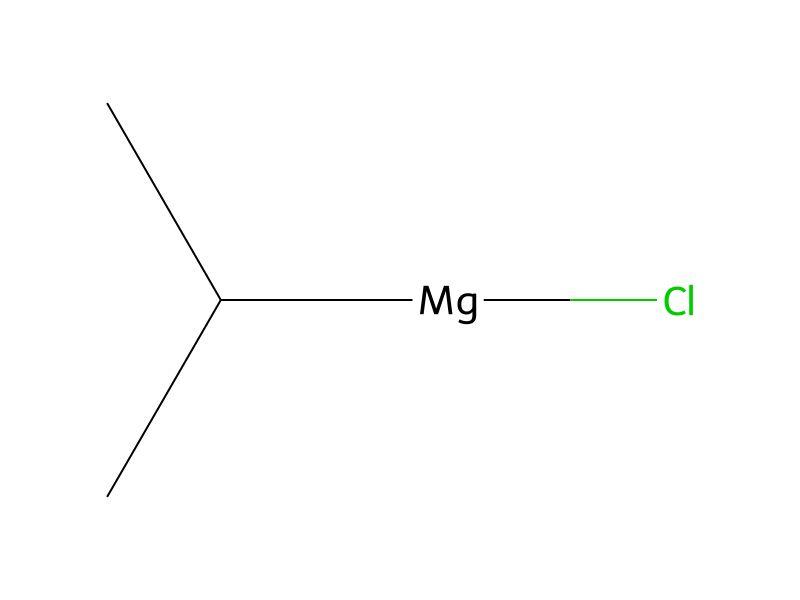
[CH:1]([Mg][Cl:5])([CH3:3])[CH3:2].[Br:6][C:7]1[CH:8]=[C:9]([C:13]([C:21]2[CH:26]=[CH:25][CH:24]=[CH:23][C:22]=2[C:27]#[N:28])=[N:14]S(C(C)(C)C)=O)[CH:10]=[CH:11][CH:12]=1>O1CCCC1>[ClH:5].[Br:6][C:7]1[CH:8]=[C:9]([C:13]2([CH:1]([CH3:3])[CH3:2])[C:21]3[C:22](=[CH:23][CH:24]=[CH:25][CH:26]=3)[C:27]([NH2:28])=[N:14]2)[CH:10]=[CH:11][CH:12]=1
KomponentenReaktionsbedingungenVersuchsvorschriftAufarbeitungQuellen und NachweiseNotizen zur Reaktion

Komponenten

4

Edukt 2

HCID 72335434N-[(3-bromophenyl)(2-cyanophenyl)methylene]-2-methylpropane-2-sulfinamideHCID 178418918HCID 178418918, Verbindung

Produkt 1

HCID 672730831-(3-Bromophenyl)-1-isopropyl-1H-isoindol-3-amine hydrochlorideAusbeute 3,2 %

Reagenzien, Katalysatoren, Lösungsmittel 1

HCID 8028TetrahydrofuranLösungsmittel

Reaktionsbedingungen

Temperatur
30 °C

Versuchsvorschrift

Isopropylmagnesium chloride (1.56 mL, 3.08 mmol, 2 M in tetrahydrofuran) was slowly and drop wise added to N-[(3-bromophenyl)(2-cyanophenyl)methylene]-2-methylpropane-2-sulfinamide (Scheme #5, N) (1.00 g, 2.57 mmol) in dry tetrahydrofuran (15 mL) at room temperature under argon atmosphere. The reaction was heated to 30° C. and stirred for 3 h and then cooled to 0° C. The reaction was quenched with water (5 mL) and extracted twice with ethyl acetate. The organic phases were pooled and washed with saturated aqueous ammonium chloride. The product was extracted five times with 2 M hydrochloric acid and once with 6 M hydrochloric acid. The water phase was neutralized with sodium hydroxide and extracted twice with ethyl acetate. The organic phase was concentrated. Column chromatography using 20-100% chloroform saturated with ammonia in chloroform and 0-100% chloroform saturated with ammonia in chloroform did not yield the pure product. Further purification was made by preparative HPLC using 5-100% acetonitrile in 0.1 M ammonium acetate/water followed by preparative HPLC (Column: Gemini C8) using acetonitrile:water 37:63+1% trifluoroacetic acid. The residue was partitioned between ethyl acetate and sodium bicarbonate. The organic phase was washed (water), dried over magnesium sulfate and concentrated. The residue was dissolved in hydrochloric acid in diethyl ether (0.13 mL, 1 M), stirred for 1 h at ambient temperature and then concentrated to give 30.1 mg (3.2% yield) of the title compound: 1H NMR (DMSO-d6) δ 8.27 (d, J=8.03 Hz, 1 H), 7.92 (d, J=7.78 Hz, 1 H), 7.84-7.76 (m, 2 H), 7.70 (d, J=8.03 Hz, 1 H), 7.64 (t, J=7.53 Hz, 1 H), 7.57-7.52 (m, 1 H), 7.39 (t, J=7.91 Hz, 1 H), 3.17-3.07 (m, 1 H), 0.88 (d, J=7.03 Hz, 3 H), 0.51 (d, J=6.78 Hz, 3 H); MS (ES) m/z 329, 331 [M+1]+.

Aufarbeitung

  1. temperaturecooled to 0° C
  2. customThe reaction was quenched with water (5 mL)
  3. extractionextracted twice with ethyl acetate
  4. washwashed with saturated aqueous ammonium chloride
  5. extractionThe product was extracted five times with 2 M hydrochloric acid
  6. extractionextracted twice with ethyl acetate
  7. concentrationThe organic phase was concentrated
  8. customdid not yield the pure product
  9. customFurther purification
  10. customThe residue was partitioned between ethyl acetate and sodium bicarbonate
  11. washThe organic phase was washed (water)
  12. dry with materialdried over magnesium sulfate
  13. concentrationconcentrated
  14. dissolutionThe residue was dissolved in hydrochloric acid in diethyl ether (0.13 mL, 1 M)
  15. stirringstirred for 1 h at ambient temperature
  16. concentrationconcentrated

Quellen und Nachweise

ORD-Eintrag
ord-064dd43773e948639276dea7d7932a28
Quelldatensatz
uspto-grants-2010_12
DOI
10.6084/m9.figshare.5104873.v1
Patentnummer
US07855213B2

Notizen zur Reaktion

Wird geladen…

Auf dieser SeiteKomponentenReaktionsbedingungenVersuchsvorschriftAufarbeitungQuellen und NachweiseNotizen zur Reaktion