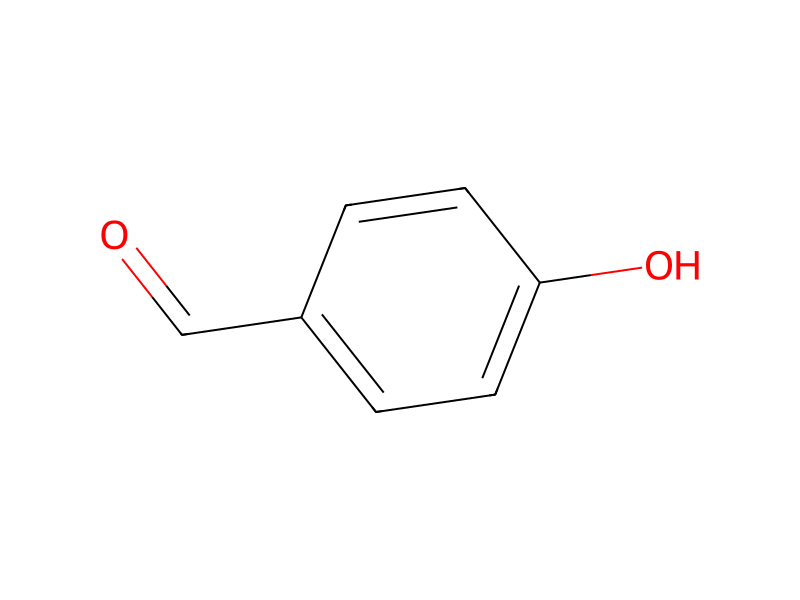
A suspension of 4-hydroxybenzaldehyde (19.2 g, 157.5 mmol), 2,6-dichlorobenzylbromide (36 g, 150 mmol) and potassium carbonate (22.77 g, 165 mmol) in DMF (150 ml) was stirred at room temperature overnight. The mixture was filtered and the filtrate evaporated under reduced pressure. The residue was dissolved in ether (500 ml), and washed with aqueous NaOH (5%, 100 ml), water (100 ml) and brine (100 ml), dried (Na2SO4) and evaporated under reduced pressure. The orange crystalline solid obtained was recrystallised from diisopropylether to give the title compound as slightly orange needles (35.8 g, 85%), m.p. 70-71°. δH (CDCl3) 9.91 (1H, s, CHO), 7.87 (2H, d, J 8.9 Hz, ArH), 7.40-7.24 (3H, m, ArCl2H), 7.12 (2H, d, J 8.7 Hz, ArH) and 5.36 (2H, s, ArCH2OAr); m/z (ESI, 60V) 281 (M++1); Found: C, 59.76; H, 3.57. C14H10O2Cl2 requires C, 59.81; H, 3.59%.