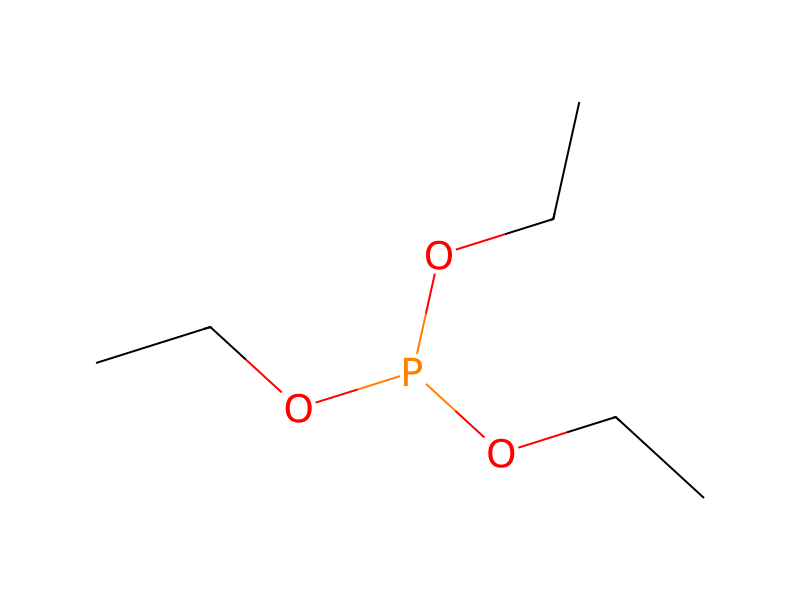
Triethyl phosphite → (2-Chloro-5-methoxy-4 nitrobenzyl)-phosphonic acid diethylester
HRID 2279873
Reaktionsgleichung

Br[CH2:2][C:3]1[CH:8]=[C:7]([O:9][CH3:10])[C:6]([N+:11]([O-:13])=[O:12])=[CH:5][C:4]=1[Cl:14].ClC1C=C([N+]([O-])=O)C(OC)=CC=1C.ClC1C=C([N+]([O-])=O)C(OC)=CC=1C(Br)Br.[CH2:43]([O:45][P:46]([O:50]CC)[O:47][CH2:48][CH3:49])[CH3:44]>C1(C)C=CC=CC=1>[CH2:43]([O:45][P:46]([CH2:2][C:3]1[CH:8]=[C:7]([O:9][CH3:10])[C:6]([N+:11]([O-:13])=[O:12])=[CH:5][C:4]=1[Cl:14])(=[O:50])[O:47][CH2:48][CH3:49])[CH3:44]Komponenten
6