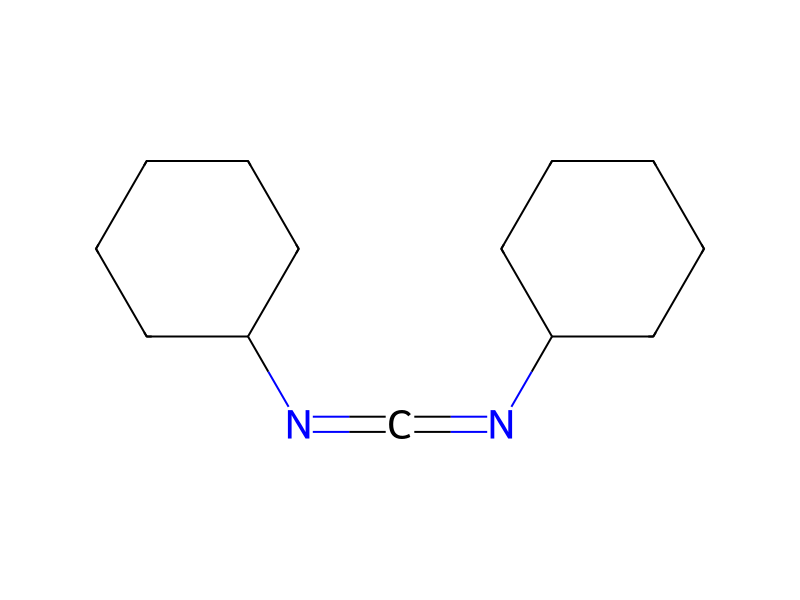
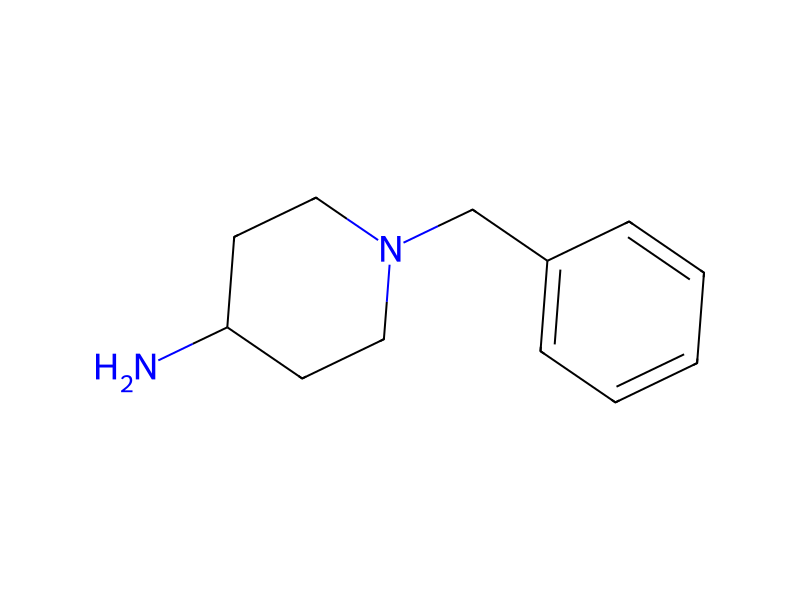
[F:1][C:2]1[CH:3]=[C:4]2[C:8](=[CH:9][CH:10]=1)[NH:7][CH:6]=[C:5]2[C:11]([OH:13])=O.[NH2:14][CH:15]1[CH2:20][CH2:19][N:18]([CH2:21][C:22]2[CH:27]=[CH:26][CH:25]=[CH:24][CH:23]=2)[CH2:17][CH2:16]1.C1(N=C=NC2CCCCC2)CCCCC1>O1CCCC1>[CH2:21]([N:18]1[CH2:19][CH2:20][CH:15]([NH:14][C:11]([C:5]2[C:4]3[C:8](=[CH:9][CH:10]=[C:2]([F:1])[CH:3]=3)[NH:7][CH:6]=2)=[O:13])[CH2:16][CH2:17]1)[C:22]1[CH:23]=[CH:24][CH:25]=[CH:26][CH:27]=1To a solution of 5.1 g of 5-fluoroindole-3-carboxylic acid in 150 ml of tetrahydrofuran were added 5.5 g of 4-amino-1-benzylpiperidine and 5.8 g of dicyclohexylcarbodiimide, and the whole mixture was refluxed under heating on a water bath for 3 hours. After completion of the reaction, the precipitated dicyclohexylurea and a part of the objective product were filtered and suspended in 200 ml of hot tetrahydrofuran. The suspension was stirred and the insoluble dicyclohexylurea was filtered off with suction. The combined filtrates were concentrated and the residue was crystallized with ethyl acetate. The resulting crystals were filtered to give 8.3 g of N-(1-benzyl-4-piperidyl)-5-fluoroindole-3-carboxamide. The product, when recrystallized from a mixture of ethyl acetate and ethanol, melts at 215°-217° C.