Hydrochloric Acid → Methyl O-(4-hydroxy-3,5-diiodophenyl)-3,5-diiodo-L-tyrosinate
HRID 2292080
Reaktionsgleichung

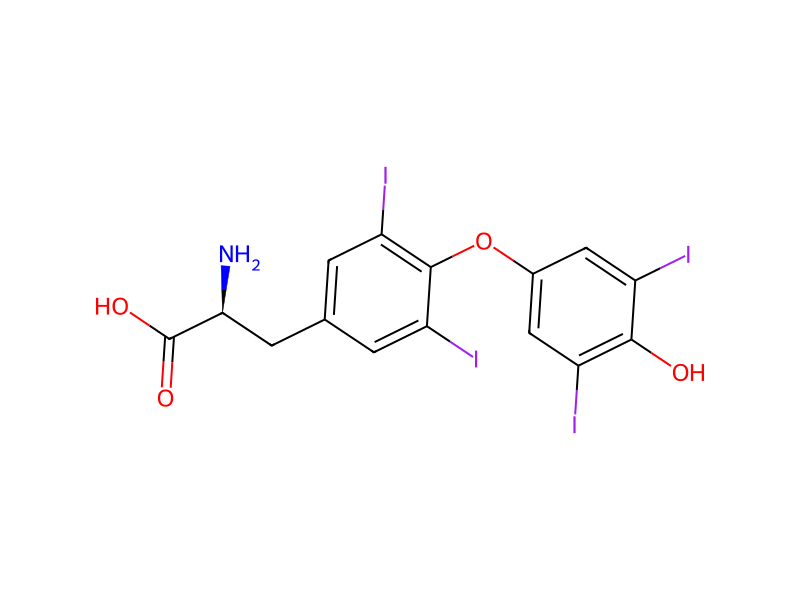
[NH2:1][C@H:2]([C:22]([OH:24])=[O:23])[CH2:3][C:4]1[CH:11]=[C:9]([I:10])[C:8]([O:12][C:13]2[CH:20]=[C:18]([I:19])[C:17]([OH:21])=[C:15]([I:16])[CH:14]=2)=[C:6]([I:7])[CH:5]=1.Cl.[CH3:26]O>>[CH3:26][O:23][C:22](=[O:24])[C@H:2]([CH2:3][C:4]1[CH:5]=[C:6]([I:7])[C:8]([O:12][C:13]2[CH:14]=[C:15]([I:16])[C:17]([OH:21])=[C:18]([I:19])[CH:20]=2)=[C:9]([I:10])[CH:11]=1)[NH2:1]Komponenten
4



Versuchsvorschrift
Thyroxine (20 g) was suspended in dry methanol (500 ml). The suspension was saturated with hydrogen chloride gas, cooled and saturated again. The crystals were collected, washed with methanol and ether, and then dried. The resulting thyroxine methyl ester hydrochloride crystals were added to 500 ml of methanol and an equimolar concentration of concentrated sodium hydroxide was added with stirring. Deionized distilled water (500 ml) was added to this solution. The solution was chilled to recrystallize the thyroxine methyl ester from the solution. The crystals were then collected and air dried.