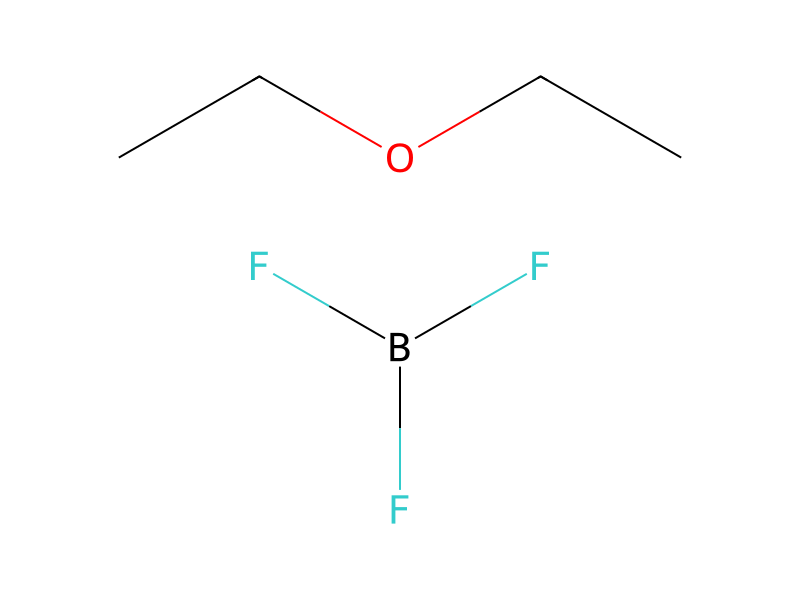
[OH:1][C:2]1[C:11]2[C:6](=[CH:7][CH:8]=[CH:9][CH:10]=2)[O:5][C:4](=[O:12])[CH:3]=1.[CH2:13]([C:15]1[CH:20]=[CH:19][C:18]([CH:21](O)[CH2:22][CH2:23][CH3:24])=[CH:17][CH:16]=1)[CH3:14].B(F)(F)F.CCOCC>O1CCOCC1>[CH2:13]([C:15]1[CH:20]=[CH:19][C:18]([CH:21]([C:3]2[C:4](=[O:12])[O:5][C:6]3[C:11]([C:2]=2[OH:1])=[CH:10][CH:9]=[CH:8][CH:7]=3)[CH2:22][CH2:23][CH3:24])=[CH:17][CH:16]=1)[CH3:14]To a flame-dried flask containing a mixture of 325 mg of 4-hydroxycoumarin and 500 mg of 1-(4-ethylphenyl)-butan-1-ol of Preparation 21 in 10 mL of dioxane under an argon atmosphere is added 1.25 mL of boron trifluoride etherate. The resulting yellow solution is left to stir at room temperature overnight. The volatiles are removed and the residue is partioned between diethyl ether and 1N sodium hydroxide. The basic aqueous phase is washed with diethyl ether and acidified to pH=1 with 6N hydrochloric acid. The resulting precipitant is repeatedly extracted with dichloromethane (methanol-chloroform co-solvents). The combined dichloromethane extracts are washed once with dilute sodium bicarbonate to remove most of the unreacted 4-hydroxycoumarin, then brine, dried (magnesium sulfate), and finally concentrated under reduced pressure. The residue is flash column chromatographed with 40% ethyl acetate in hexane to yield 360 mg of the title product as a white solid.