StartseiteMCPWorkbenchSkills
StartseiteWorkbenchBenachrichtigungenMein Bereich
llms.txt · MCP-AnleitungDatenschutz · Nutzungsbedingungen · Supportv1.8.3
  1. Startseite
  2. /Reaktion

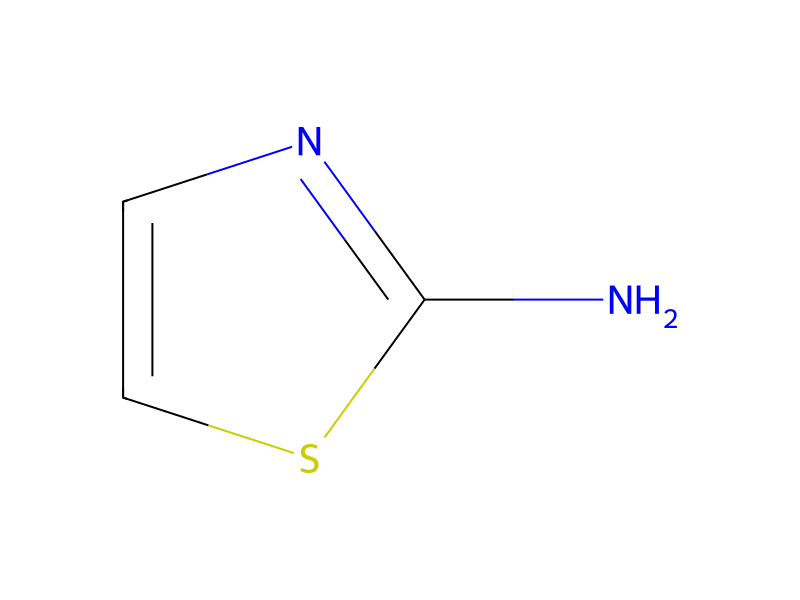
2-Aminothiazole → (E)-3-cyclopentyl-2-[4-(5-methyl-tetrazol-1-yl)-3-trifluoromethyl-phenyl]-N-thiazol-2-yl-acrylamide

HRID 2306444
Drucken

Reaktionsgleichung

Reaktionsgleichung von HRID 2306444
C1(P(C2C=CC=CC=2)C2C=CC=CC=2)C=CC=CC=1.BrN1C(=O)CCC1=O.[CH:28]1(/[CH:33]=[C:34](\[C:38]2[CH:43]=[CH:42][C:41]([N:44]3[C:48]([CH3:49])=[N:47][N:46]=[N:45]3)=[C:40]([C:50]([F:53])([F:52])[F:51])[CH:39]=2)/[C:35]([OH:37])=O)[CH2:32][CH2:31][CH2:30][CH2:29]1.[NH2:54][C:55]1[S:56][CH:57]=[CH:58][N:59]=1>C(Cl)Cl>[CH:28]1(/[CH:33]=[C:34](\[C:38]2[CH:43]=[CH:42][C:41]([N:44]3[C:48]([CH3:49])=[N:47][N:46]=[N:45]3)=[C:40]([C:50]([F:52])([F:51])[F:53])[CH:39]=2)/[C:35]([NH:54][C:55]2[S:56][CH:57]=[CH:58][N:59]=2)=[O:37])[CH2:32][CH2:31][CH2:30][CH2:29]1
KomponentenReaktionsbedingungenVersuchsvorschriftAufarbeitungQuellen und NachweiseNotizen zur Reaktion

Komponenten

6

Edukt 4

HCID 21552-AminothiazoleHCID 11776TriphenylphosphineHCID 67184N-bromobutanimideHCID 69691685(E)-3-cyclopentyl-2-[4-(5-methyl-tetrazol-1-yl)-3-trifluoromethyl-phenyl]-acrylic acid

Produkt 1

HCID 10160950(E)-3-cyclopentyl-2-[4-(5-methyl-tetrazol-1-yl)-3-trifluoromethyl-phenyl]-N-thiazol-2-yl-acrylamideAusbeute 15,5 %

Reagenzien, Katalysatoren, Lösungsmittel 1

HCID 6344DichloromethaneLösungsmittel2×

Reaktionsbedingungen

Temperatur
0 °C

Versuchsvorschrift

A solution of triphenylphosphine (204 mg, 0.78 mmol) in methylene chloride (8 mL) was cooled to 0° C. and then treated with N-bromosuccinimide (138 mg, 0.78 mmol). The reaction mixture was stirred at 0° C. for 30 min and then treated with a solution of (E)-3-cyclopentyl-2-[4-(5-methyl-tetrazol-1-yl)-3-trifluoromethyl-phenyl]-acrylic acid (143 mg, 0.39 mmol) in methylene chloride (5 mL). The reaction mixture was stirred for 15 min at 0° C. and then allowed to warm to 25° C. where it was stirred for 1.5 h. The reaction mixture was then treated with 2-aminothiazole (117 mg, 1.17 mmol), and the resulting suspension was stirred for 2 d at 25° C. The reaction mixture was then concentrated in vacuo to remove methylene chloride, and the residue was diluted with ethyl acetate (20 mL) and a 1N aqueous hydrochloric acid solution (30 mL). The two layers were separated, and the aqueous layer was extracted with ethyl acetate (1×15 mL). The combined organic extracts were successively washed with a 1N aqueous hydrochloric acid solution (1×50 mL), a saturated aqueous sodium bicarbonate solution (1×50 mL) and a saturated aqueous sodium chloride solution (1×50 mL), dried over anhydrous magnesium sulfate, filtered, and concentrated in vacuo. Biotage chromatography (FLASH 40S, Silica, 1/2 hexanes/ethyl acetate) afforded the (E)-3-cyclopentyl-2-[4-(5-methyl-tetrazol-1-yl)-3-trifluoromethyl-phenyl]-N-thiazol-2-yl-acrylamide (27 mg, 15.5%) as an amorphous white solid: EI-HRMS m/e calcd for C20H19F3N6OS (M+) 448.1293, found 448.1285.

Aufarbeitung

  1. stirringThe reaction mixture was stirred for 15 min at 0° C.
  2. temperatureto warm to 25° C. where it
  3. stirringwas stirred for 1.5 h
  4. stirringthe resulting suspension was stirred for 2 d at 25° C
  5. concentrationThe reaction mixture was then concentrated in vacuo
  6. customto remove methylene chloride
  7. additionthe residue was diluted with ethyl acetate (20 mL)
  8. customThe two layers were separated
  9. extractionthe aqueous layer was extracted with ethyl acetate (1×15 mL)
  10. washThe combined organic extracts were successively washed with a 1N aqueous hydrochloric acid solution (1×50 mL)
  11. dry with materiala saturated aqueous sodium bicarbonate solution (1×50 mL) and a saturated aqueous sodium chloride solution (1×50 mL), dried over anhydrous magnesium sulfate
  12. filtrationfiltered
  13. concentrationconcentrated in vacuo

Quellen und Nachweise

ORD-Eintrag
ord-7d16d21a0a604059adb320c1dd508d18
Quelldatensatz
uspto-grants-2002_08
DOI
10.6084/m9.figshare.5104873.v1
Patentnummer
US06441180B1

Notizen zur Reaktion

Auf dieser SeiteKomponentenReaktionsbedingungenVersuchsvorschriftAufarbeitungQuellen und NachweiseNotizen zur Reaktion

