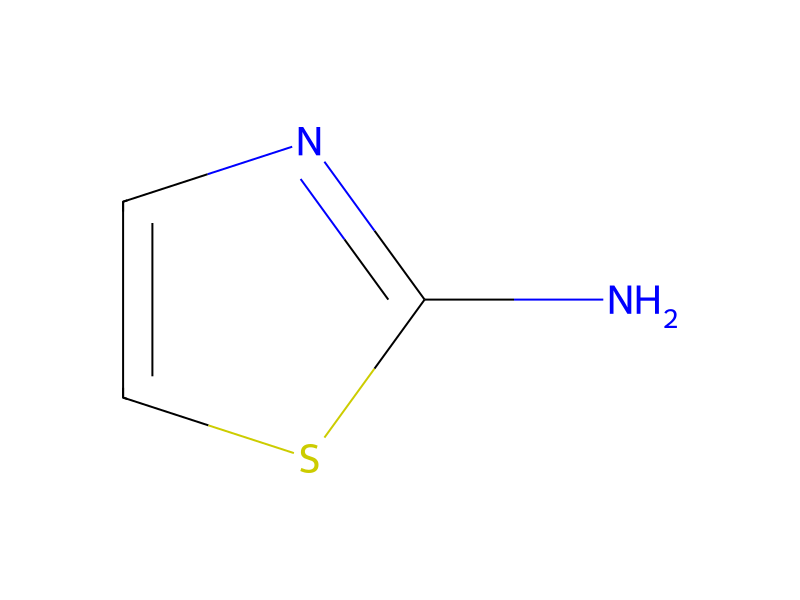
After adding 2.45 g (24.5 mmol) of 2-aminothiazole, 3.40 ml (24.5 mmol) of triethylamine and 4.14 g (24.5 mmol) of 2-chloro-1,3-dimethylimidazolinium chloride to a solution of 2.40 g (12.2 mmol) of the obtained carboxylic acid in chloroform (50 ml) while cooling on ice, the mixture was stirred at room temperature for 13 hours. Saturated aqueous ammonium chloride was added to the reaction mixture, extraction was performed with chloroform, and the organic layer was dried and then concentrated under reduced pressure. After adding 10 ml of 4N aqueous sodium hydroxide to a solution of the obtained residue in methanol (40 ml), the mixture was stirred at room temperature for 1 hour. The reaction mixture was concentrated under reduced pressure, and then saturated aqueous ammonium chloride was added, extraction was performed with chloroform, and the organic layer was dried and then concentrated under reduced pressure. The obtained residue was purified by silica gel chromatography (chloroform:methanol=100:1) to obtain 1.81 g of 5-hydroxy-3-isopropoxy-N-thiazol-2-yl-benzamide (yield: 53%) as a white solid.