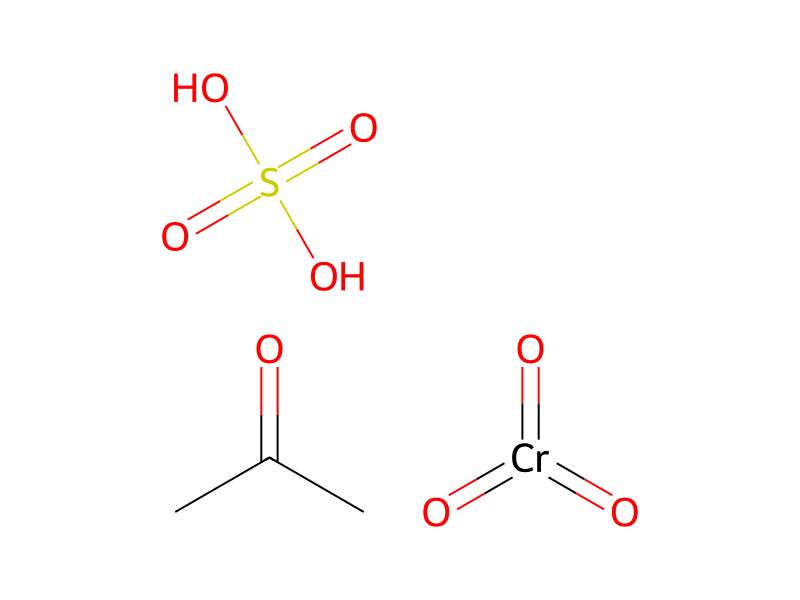
To a solution of (3S, 4R)-3-(1-methoxy-1-methylethyl)-4-(2-oxoethyl)azetidin-2-one (760 mg) in acetone (60 ml) was added dropwise 2N Jones Reagent (4.10 ml) at 0° C. After stirring for 30 minutes at 0° C., isopropyl alcohol (8 ml) was added to the resultant mixture, and then evaporated in vacuo. The residue was dissolved in a saturated aqueous sodium chloride (40 ml) and extracted with chloroform (80 ml×5). After drying over magnesium sulfate, the chloroform extracts were filtered and evaporated in vacuo. The residue was chromatographed on silica gel (30 g) eluting with a mixture of methylene chloride and methanol (10:1 to 1:2), and then a mixture of acetic acid and ethyl acetate (1:50) to give 2-[(2R, 3S)-3-(1-methoxy-1-methylethyl)-4-oxoazetidin-2-yl]acetic acid (545.1 mg) as an amorphous solid.