Pyrazole → HCID 72343819, Verbindung
Reaktionsgleichung

Cl.[NH:2]([C:4]1[CH:9]=[CH:8][N:7]=[CH:6][CH:5]=1)[NH2:3].[Br:10][C:11]1[S:15][C:14]([C:16](=[O:24])[CH2:17][C:18](=O)[C:19]([O:21][CH3:22])=[O:20])=[CH:13][CH:12]=1.N1C=CC=N1>CO>[Br:10][C:11]1[S:15][C:14]([C:16](=[O:24])[CH2:17][C:18](=[N:3][NH:2][C:4]2[CH:9]=[CH:8][N:7]=[CH:6][CH:5]=2)[C:19]([O:21][CH3:22])=[O:20])=[CH:13][CH:12]=1Komponenten
5
Edukt 3
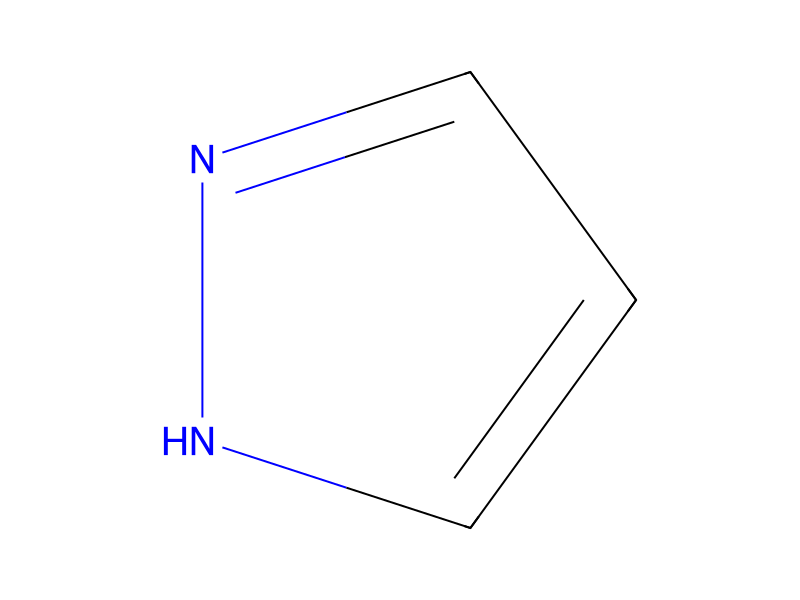


Produkt 1

Reagenzien, Katalysatoren, Lösungsmittel 1

Versuchsvorschrift
4-Hydrazinopyridine hydrochloride (366 mg, 2.51 mmol) and methyl 4-(5-bromothiophen-2-yl)-2,4-dioxobutanoate (724 mg, 2.5 mmol) were suspended in MeOH (12 mL) and heated to reflux to afford a yellow solution. After refluxing for 24 hours the reaction was allowed to cool to ambient temperature and was concentrated under reduced pressure to afford an orange oil. LC/MS analysis showed it to be a mixture of two isomers of the hydrazone with a small amount of cyclized pyrazole present. This material was carried on the dehydrative cyclization to prepare the cyclized pyrazole. MS(ES): 384 [M+H]+.