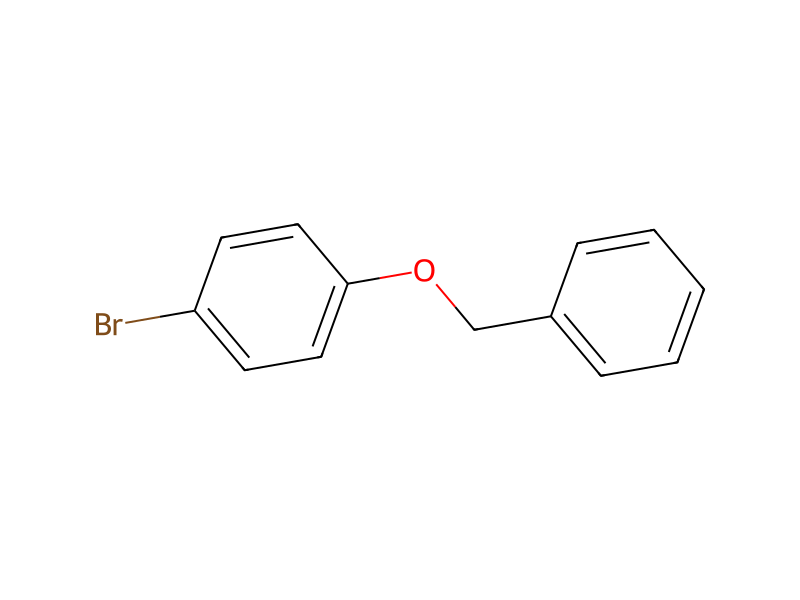
In a RB flask (250 mL) was placed magnesium turnings (2.08 g, 85.9 mmol), which were stirred under vacuum without solvent overnight. To the stirred magnesium turnings was added anhydrous THF (10 mL). To the resulting mixture at 50° C. was added several drops of dibromoethane, followed by 4-benzyloxybromobenzene (11.8 g, 42.9 mmol) in 40 ml of THF. After addition was complete, the reaction mixture was heated at 60° C. for 3 hours until a brownish-grey slurry was formed. The reaction mixture was cooled in an ice-bath and 3,3-dimethyl-cyclohexanone (3.87 g, 30.67 mmol) in THF (15 mL) was added dropwise. The reaction mixture was stirred at room temperature for one hour. The solvent was removed under reduced pressure. The residue was partitioned between EtOAc/aqueous NH4Cl. The aqueous phase was extracted three times with EtOAc. The organic phase was combined and dried (Na2SO4). Silica gel chromatography (EtOAc/heptane) provided 5.08 g of 1-(4-benzyloxy-phenyl)-3,3-dimethyl-cyclohexanol as a white solid.