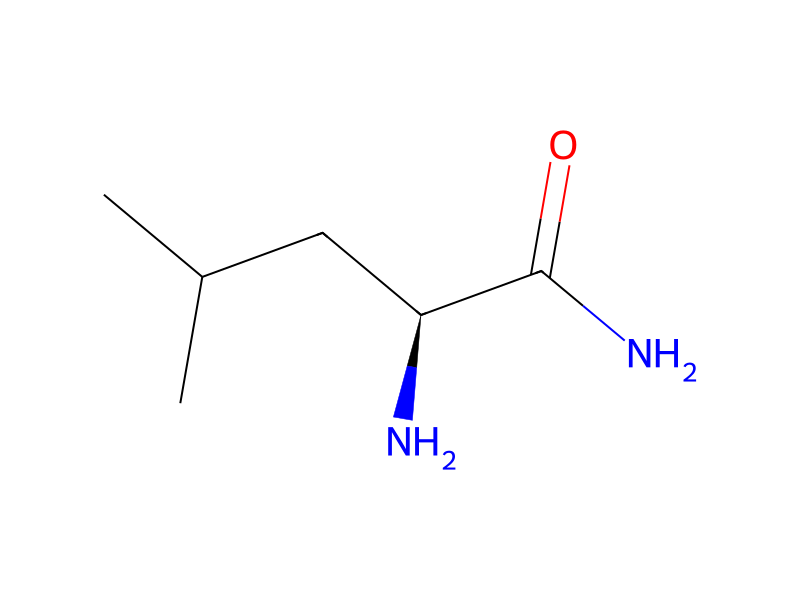
Leucinamide → N-(tert-Butoxycarbonyl)-L-phenylalanyl-L-leucinamide
Reaktionsgleichung

[NH:1]([C:13]([O:15][C:16]([CH3:19])([CH3:18])[CH3:17])=[O:14])[C@H:2]([C:10]([OH:12])=O)[CH2:3][C:4]1[CH:9]=[CH:8][CH:7]=[CH:6][CH:5]=1.[NH2:20][C@H:21]([C:26]([NH2:28])=[O:27])[CH2:22][CH:23]([CH3:25])[CH3:24]>CS(C)=O>[NH:1]([C:13]([O:15][C:16]([CH3:19])([CH3:18])[CH3:17])=[O:14])[C@H:2]([C:10]([NH:20][C@H:21]([C:26]([NH2:28])=[O:27])[CH2:22][CH:23]([CH3:25])[CH3:24])=[O:12])[CH2:3][C:4]1[CH:5]=[CH:6][CH:7]=[CH:8][CH:9]=1Komponenten
4
Edukt 2

Produkt 1

Reagenzien, Katalysatoren, Lösungsmittel 1

Versuchsvorschrift
1 ml 0.1M veronal-Na/HCl buffer, pH 8.3/50% (v/v) DMSO, containing 100 mM Boc-Phe-OCam, 300 mM H-Leu-NH2 and 100 μM trypsinogen is agitated at room temperature under pH control. After 3 hours, the reaction is stopped as described in Example 3. The yield is analytically determined with HPLC to be 93% of theory.