StartseiteMCPWorkbenchSkills
StartseiteWorkbenchBenachrichtigungenMein Bereich
llms.txt · MCP-AnleitungDatenschutz · Nutzungsbedingungen · Supportv1.8.3
  1. Startseite
  2. /Reaktion

Potassium Hydroxide → 4-(4-bromo-1-ethyl-1H-pyrazol-5-yl)-2-thiophenecarboxylic acid

HRID 2392025
Drucken

Reaktionsgleichung

Reaktionsgleichung von HRID 2392025
[Br:1][C:2]1[CH:3]=[N:4][N:5]([CH2:16][CH3:17])[C:6]=1[C:7]1[CH:8]=[C:9]([C:12]([O:14]C)=[O:13])[S:10][CH:11]=1.[OH-].[K+]>C1COCC1.O>[Br:1][C:2]1[CH:3]=[N:4][N:5]([CH2:16][CH3:17])[C:6]=1[C:7]1[CH:8]=[C:9]([C:12]([OH:14])=[O:13])[S:10][CH:11]=1
KomponentenReaktionsbedingungenVersuchsvorschriftAufarbeitungQuellen und NachweiseNotizen zur Reaktion

Komponenten

4

Edukt 2

HCID 14797Potassium HydroxideHCID 57826836methyl 4-(4-bromo-1-ethyl-1H-pyrazol-5-yl)-2-thiophenecarboxylate

Produkt 1

HCID 670660994-(4-bromo-1-ethyl-1H-pyrazol-5-yl)-2-thiophenecarboxylic acid

Reagenzien, Katalysatoren, Lösungsmittel 1
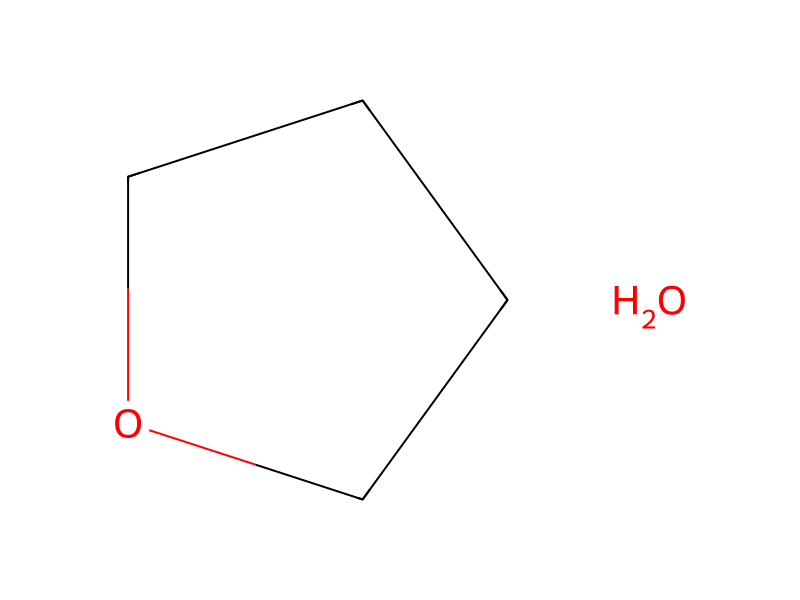
HCID 21881883Oxolane--water (1/1)Lösungsmittel

Reaktionsbedingungen

Temperatur
50 °C

Versuchsvorschrift

To a solution of methyl 4-(4-bromo-1-ethyl-1H-pyrazol-5-yl)-2-thiophenecarboxylate (0.2 g, 0.63 mmol) in THF/H2O (5 mL/1 mL) was added KOH (0.15 g, 2.4 mmol). The reaction mixture was heated to 50° C. for 10 h and then concentrated and diluted with H2O (2 mL). The pH was adjusted to 6 with aqueous HCl. The mixture was extracted with DCM (3×5 mL) and the collected organic fractions were concentrated under vacuum to give crude 4-(4-bromo-1-ethyl-1H-pyrazol-5-yl)-2-thiophenecarboxylic acid, which was used directly without further purification. LC-MS (ES) m/z=302 (M+H)+.

Aufarbeitung

  1. concentrationconcentrated
  2. additiondiluted with H2O (2 mL)
  3. extractionThe mixture was extracted with DCM (3×5 mL)
  4. concentrationthe collected organic fractions were concentrated under vacuum

Quellen und Nachweise

ORD-Eintrag
ord-409d7fcbc9c540d39a4a577c6706bd3b
Quelldatensatz
uspto-grants-2012_09
DOI
10.6084/m9.figshare.5104873.v1
Patentnummer
US08273782B2

Notizen zur Reaktion

Auf dieser SeiteKomponentenReaktionsbedingungenVersuchsvorschriftAufarbeitungQuellen und NachweiseNotizen zur Reaktion
