tert-Butanol → t-Butyloxycarbonyl-4-{3-(2-benzyloxyphenyl)propyl]benzene-amine
Reaktionsgleichung
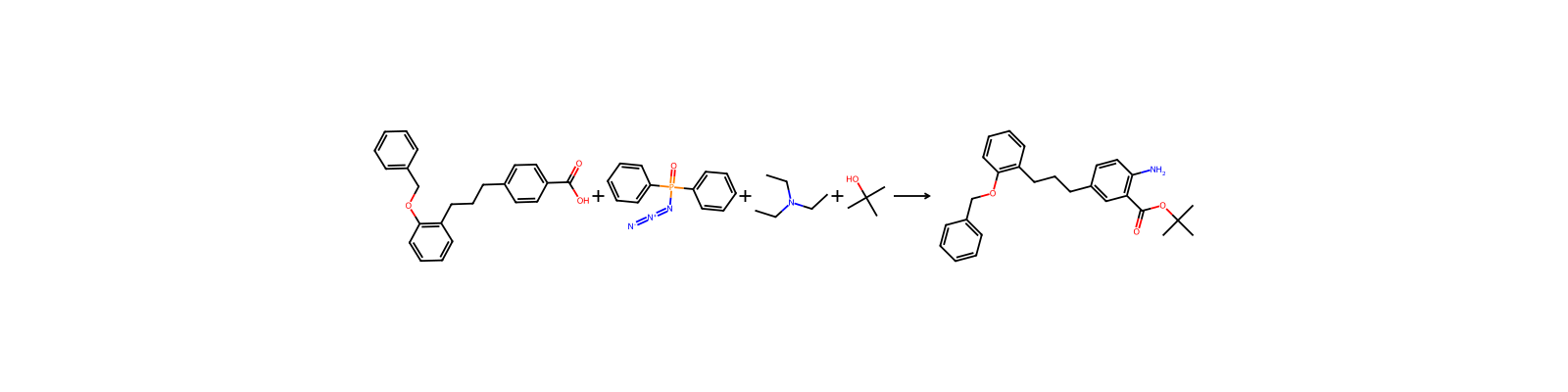
[CH2:1]([O:8][C:9]1[CH:14]=[CH:13][CH:12]=[CH:11][C:10]=1[CH2:15][CH2:16][CH2:17][C:18]1[CH:23]=C[C:21](C(O)=O)=[CH:20][CH:19]=1)[C:2]1[CH:7]=[CH:6][CH:5]=[CH:4][CH:3]=1.C1(P(N=[N+]=[N-])(C2C=CC=CC=2)=[O:34])C=CC=CC=1.C([N:46]([CH2:49][CH3:50])CC)C.[C:51]([OH:55])([CH3:54])([CH3:53])[CH3:52]>>[C:51]([O:55][C:21]([C:20]1[CH:19]=[C:18]([CH2:17][CH2:16][CH2:15][C:10]2[CH:11]=[CH:12][CH:13]=[CH:14][C:9]=2[O:8][CH2:1][C:2]2[CH:3]=[CH:4][CH:5]=[CH:6][CH:7]=2)[CH:23]=[CH:50][C:49]=1[NH2:46])=[O:34])([CH3:54])([CH3:53])[CH3:52]Komponenten
5




Versuchsvorschrift
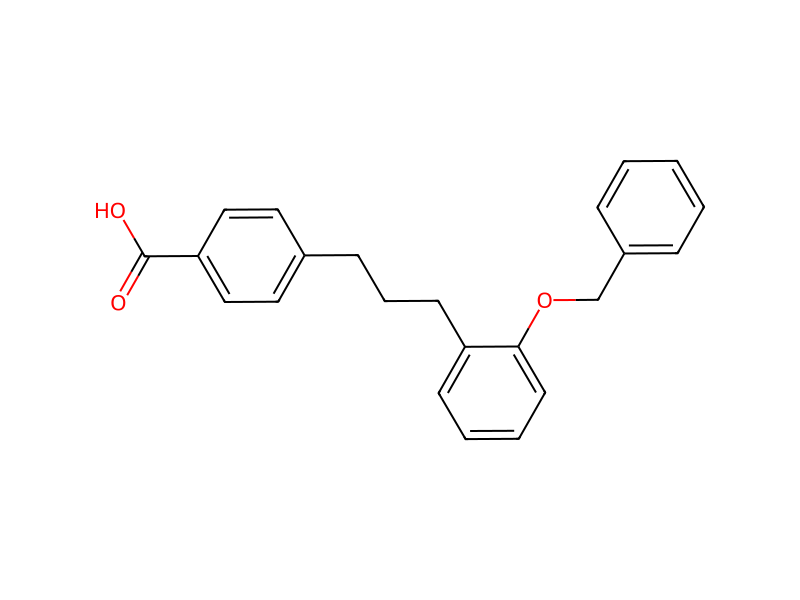
A mixture of 4-[3-(2-benzyloxyphenyl)propyl]benzene carboxylic acid (8.39 g), diphenylphosphoryl azide (5.74 ml) and triethylamine (7.1 ml) in t-butanol (80 ml) was heated under reflux in an argon atmosphere for 16 hours. The reaction mixture was evaporated to dryness and the residue partitoned between ethyl acetate and water. The ethyl acetate extract was washed once each with 2N HCl, water, saturated aqueous sodium bicarbonate solution and brine (20 ml each time) and dried (MgSO4). The solvent was evaporated and the residue subjected to flash chromatography eluted with a mixture of dichloromethane:hexane (1:1 v/v) to give N t-butyloxycarbonyl-4-{3-(2-benzyloxyphenyl)propyl]benzene-amine 7.69 g m.p. 86°-8° C. which was used directly in the next step.