Acetone → 5-Bromo-2,2-dimethyl-5-nitro-1,3-dioxane
HRID 2398637
Reaktionsgleichung

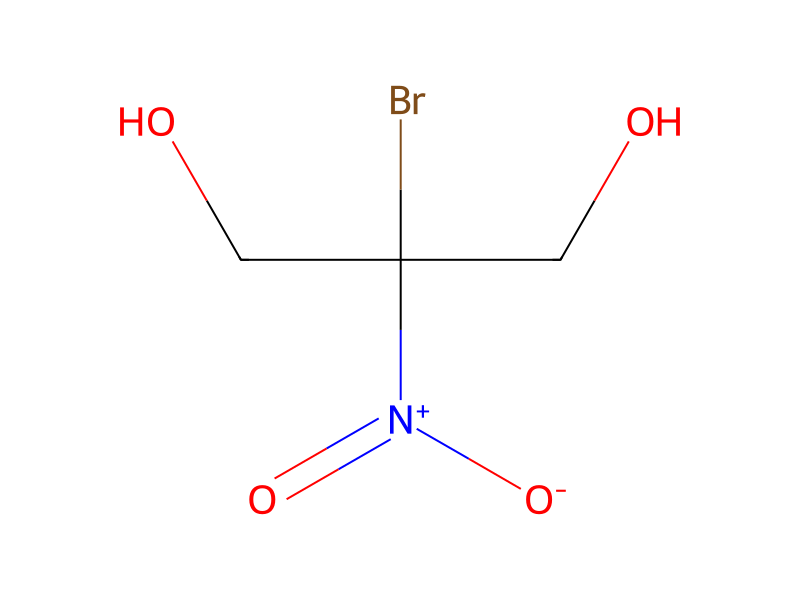
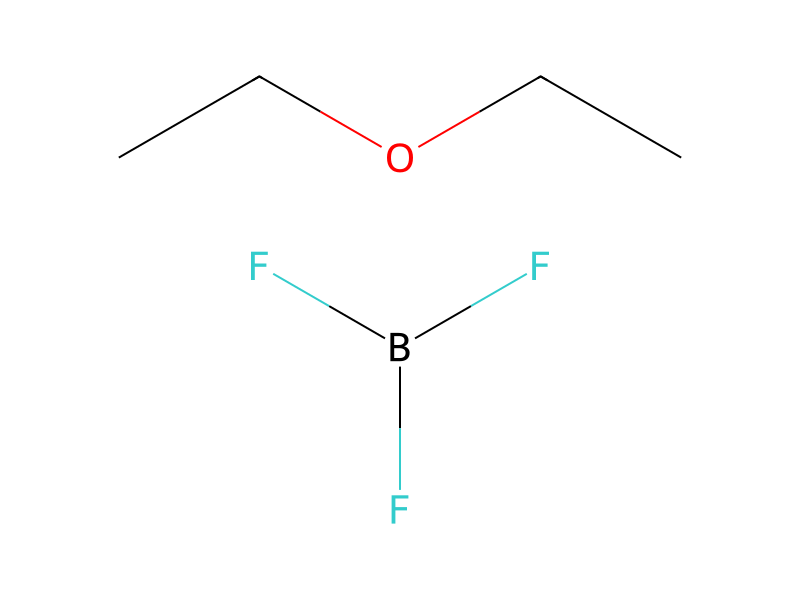
[Br:1][C:2]([N+:7]([O-:9])=[O:8])([CH2:5][OH:6])[CH2:3][OH:4].[CH3:10][C:11]([CH3:13])=O.B(F)(F)F.CCOCC.C(=O)(O)[O-].[Na+]>>[Br:1][C:2]1([N+:7]([O-:9])=[O:8])[CH2:5][O:6][C:11]([CH3:13])([CH3:10])[O:4][CH2:3]1Komponenten
5



Versuchsvorschrift
To a 100 ml. 3-necked flask equipped with magnetic stirring was added 20 g. (0.1 mole) of 2-bromo-2-nitropropane-1,3-diol and 30 ml. (0.5 mole) of acetone. After solution was complete, the temperature was 15° C. Then 13 ml. (0.1 mole) of boron trifluoride etherate was added to the reaction mixture from a dropping funnel over a period of about 2 minutes. The temperature rose to 47° C. and then dropped to 35° C. over a period of 10 minutes. The reaction mixture was then poured into 150 ml. of a saturated sodium bicarbonate solution and stirred for 15 minutes. The solids were filtered and washed with 200 ml. acetone, dried and an IR showed a reaction had occurred. About 18 g. of crude material was dissolved in 150 ml. of hot hexane and filtered. On cooling and standing overnight 9.0 g. (40% yield) of 5-bromo-2,2-dimethyl-5-nitro- 1,3-dioxane was obtained as pure white needles. An NMR and IR confirmed the structure. An elemental analysis disclosed the following percentage composition: