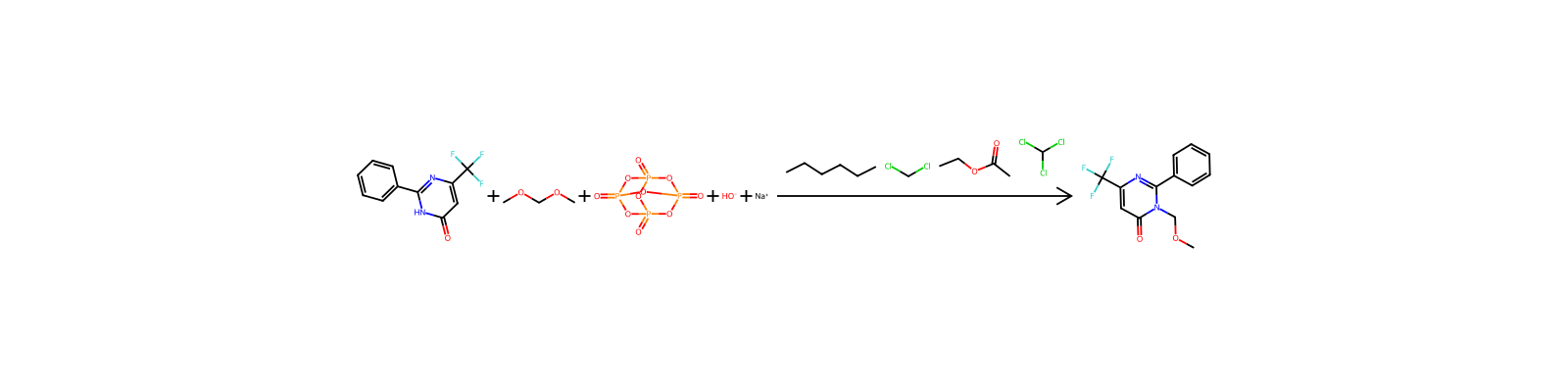
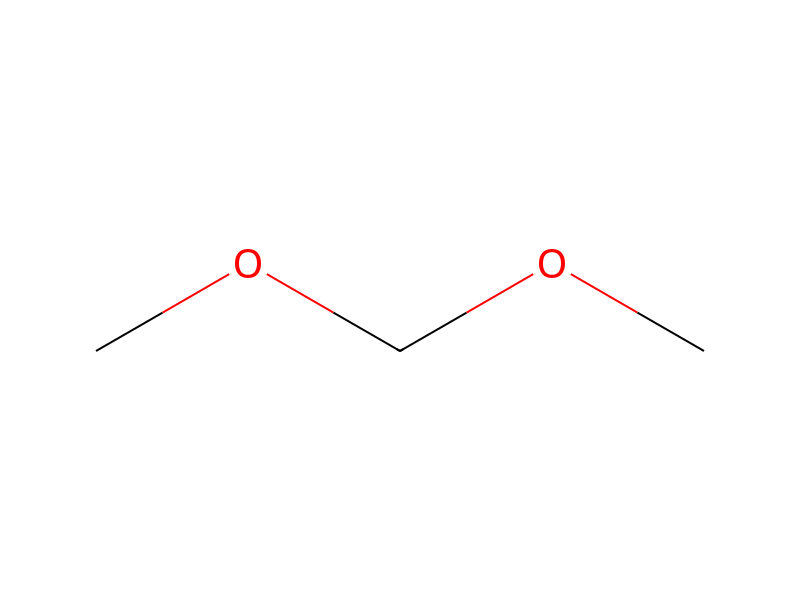
To a solution of 1.5 g (5.9 mmol) of 2-phenyl-6-trifluoromethyl-4(3H)-pyrimidinone, 17.2 g (226.3 mmol) dimethoxymethane, and 35 mL of chloroform was added 2.5 g (17.6 mmol) phosphorous pentoxide, at room temperature. By TLC (25% ethyl acetate in hexane) the reaction was incomplete after 4 h and an additional 3 g (21.1 mmol) phosphorous pentoxide was added. Stirring was continued for 16 h. The reaction mixture was poured onto crushed ice and 1M sodium hydroxide and methylene chloride were added. The layers were separated and the aqueous layer was extracted twice with methylene chloride. The organic extracts were combined and washed with brine, then dried over MgSO4 and concentrated to yield 1.1 g crude product, which was purified by recrystallization from hexane. Thus, 0.55 g (32%) 3-methoxymethyl-2-phenyl-6-trifluoromethyl-4(3H)-pyrimidinone (Compound 6) as a yellow solid was obtained. 1H-NMR (CDCl3)δ3.55 (3 H, s); 5.2 (2H, d); 6.85 (1H, s); 7.65 (3H, m); 7.75 (2H, m).