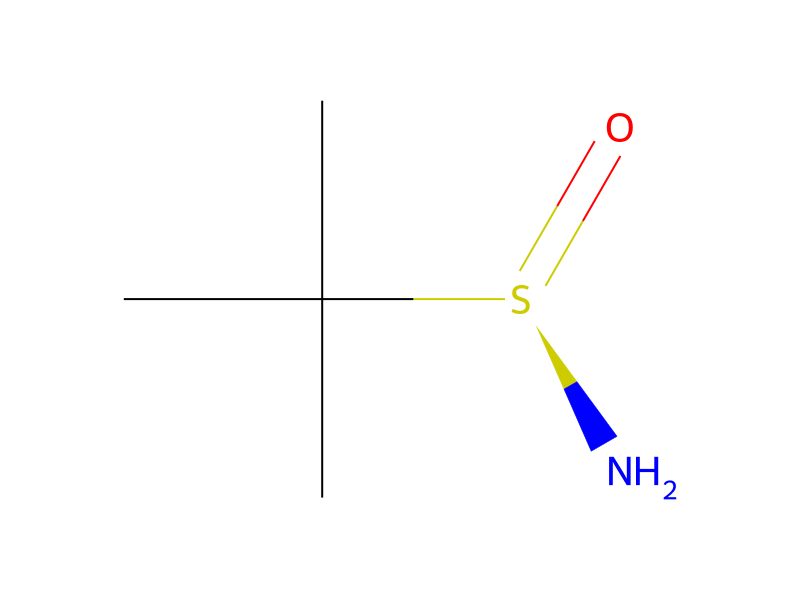
[Cl:1][C:2]1[CH:3]=[C:4]2[C:8](=[CH:9][CH:10]=1)[C:7](=O)[CH:6]([O:12][CH3:13])[CH2:5]2.[C:14]([S@:18]([NH2:20])=[O:19])([CH3:17])([CH3:16])[CH3:15]>O1CCCC1>[Cl:1][C:2]1[CH:3]=[C:4]2[C:8](=[CH:9][CH:10]=1)/[C:7](=[N:20]\[S@@:18]([C:14]([CH3:17])([CH3:16])[CH3:15])=[O:19])/[C@@H:6]([O:12][CH3:13])[CH2:5]2A 22 L multi-neck reactor equipped with a condenser, a nitrogen inlet, a heating mantle and an overhead mechanical stirrer was charged with 5-chloro-2-methoxy-2,3-dihydro-1H-inden-1-one (18) (622.88 g, 3.17 mol) and (R)-tert-butylsulfinamide (460.7 g, 3.8 mol). Tetrahydrofuran (3100 mL) was added to the mixture and the temperature dropped to 9° C. Ti(OEt)4 (985 mL, 4.76 mol) was added over 10 minutes. The mixture was heated to 68° C. and all solids dissolved at about 35° C. After 5 hours, the reaction achieved a 50% yield as determined by HPLC wt % assay. The reaction was stirred at 68° C. for an additional 5 hours until the undesired diastereomer decomposed to less than 5% (AUC). The reaction was cooled to ambient temperature over 2 hours and stirred for 16 hours. HPLC analysis indicated no obvious change in reaction profile during this period. This crude reaction mixture was taken in to the next step without further purification.