Tributylstannane → Phosphine, bis(1,1,2,2,2-pentafluoroethyl)-
HRID 241311
Reaktionsgleichung

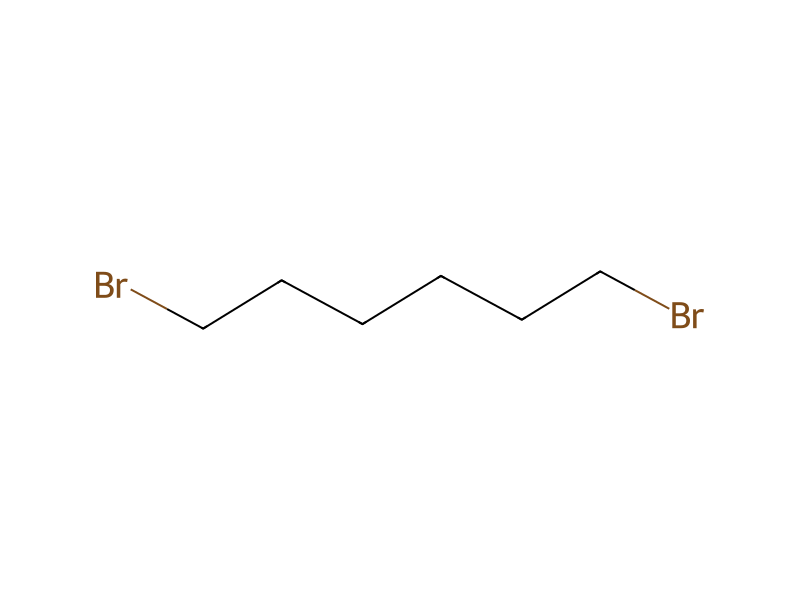
[F:1][C:2]([P:8](Cl)[C:9]([F:15])([F:14])[C:10]([F:13])([F:12])[F:11])([F:7])[C:3]([F:6])([F:5])[F:4].C([SnH](CCCC)CCCC)CCC>BrCCCCCCBr>[F:7][C:2]([PH:8][C:9]([F:14])([F:15])[C:10]([F:11])([F:12])[F:13])([F:1])[C:3]([F:6])([F:5])[F:4]Komponenten
4
Edukt 2


Produkt 1

Reagenzien, Katalysatoren, Lösungsmittel 1
Versuchsvorschrift
0.3 g (1.0 mmol) of bis(pentafluoroethyl)phosphinous acid chloride, (C2F5)2PCl, obtainable in accordance with Example 2, is condensed into a degassed solution of 0.61 g (2.0 mmol) of tributyltin hydride, (n-C4H9)3SnH, in 1,6-dibromohexane. The mixture is stirred at room temperature for one hour, and the volatile compounds are subsequently removed under dynamic vacuum conditions. Three cold traps are used: −30° C., −78° C. and −196° C. The cold trap at −196° C. contains a colourless liquid, bis(pentafluoroethyl)phosphine, (C2F5)2PH. The compound is stable at room temperature under inert-gas conditions.