Reaktionsgleichung

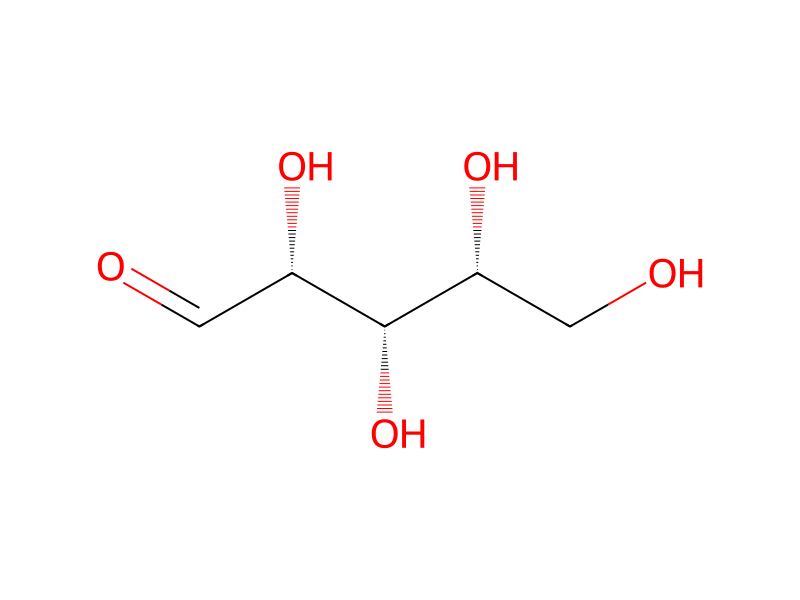
N.[O:2]=[CH:3][C@@H:4]([C@H:6]([C@@H:8]([C@@H:10]([CH2:12][OH:13])[OH:11])[OH:9])[OH:7])[OH:5]>>[O:2]=[CH:3][C@@H:4]([C@H:6]([C@@H:8]([C@@H:10]([CH2:12][OH:13])[OH:11])[OH:9])[OH:7])[OH:5].[O:2]=[CH:3][C@@H:4]([C@H:6]([C@@H:8]([CH2:10][OH:11])[OH:9])[OH:7])[OH:5]Komponenten


Versuchsvorschrift
The moisture content of samples of 1 mm knife-milled switchgrass was adjusted to 8% (92% DM), 18% (82% DM), or 28% (72% DM) moisture content and subjected to 10% anhydrous ammonia treatment for 1 h at 150-160° C. The samples had dry matter contents of approximately 98%, 97% and 96%, respectively, after flashing off of the ammonia at the end of the anhydrous ammonia treatment. The samples were attritor milled for the equivalent of 5 min in the Union Process attritor mill of Example 4. The samples were then saccharified for 120 hr at 47° C. at a solids loading of 25% at enzyme loadings of 7, 14 and 28 mg glucanase+xylanase/g glucan+xylan. Yields of total soluble glucose and sylose (includes monomers and olibomers) are shown in FIG. 13. The 7 and 14 mg enzyme loadings showed an absolute increase in solubilized xylose yield of 12% and 11%, respectively, for samples ammonia treated at 18% moisture as opposed to 8% moisture content. The absolute increases in solubilized glucose yields were 5.5% and 8% for the same samples. The 18% and 28% moisture content samples produced similar saccharification yields for glucose and xylose. There was therefore a distinct advantage to having a moisture content of at least 18% going into the anhydrous ammonia treatment.
Aufarbeitung
- customyields
- customThe 18% and 28% moisture content samples produced similar saccharification
Quellen und Nachweise
- ORD-Eintrag
- ord-a8e1c4b2d9784d00a23426733f0bd9f0
- Quelldatensatz
- uspto-grants-2014_02
- Patentnummer
- US08651403B2
Verknüpfte Notizen
Wird geladen…