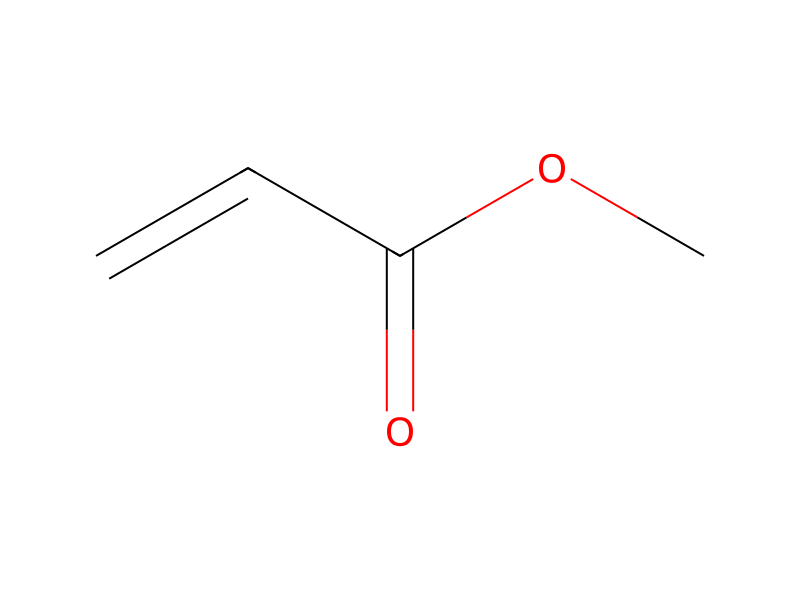
The inside of the same flask as used in Example 1 was thoroughly purged with nitrogen, and the flask was charged with 1065 ml of n-hexane and 17.5 millimoles of ethylaluminum dichloride. The temperature of the solution was maintained at 20° C. At this temperature, 301 g of an equimolar mixture of vinyl acetate and methyl acrylate and 300 ml of a 0.03 mole/liter n-hexane solution of tertbutylperoxy isopropyl carbonate were fed continuously with stirring for 5 hours at constant rates using the two metering pumps. In this case, the copolymerization proceeded with almost the same behavior as in Example 1. The same operation as in Example 1 gave 167 g of a vinyl acetate/methyl acrylate copolymer. By NMR spectroscopy, the copolymer was found to have a methyl acrylate content of 60 mole%.