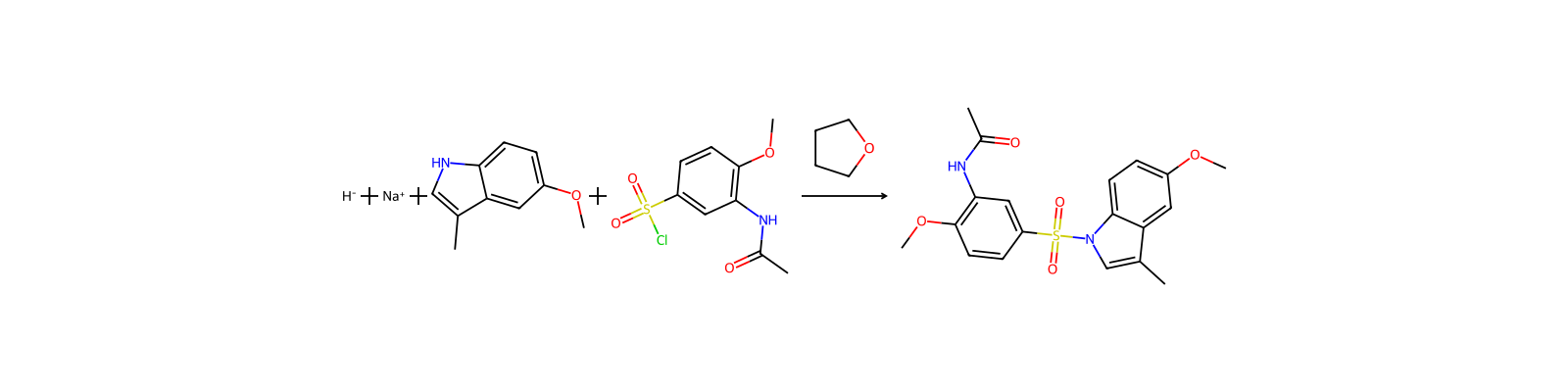
[H-].[Na+].[CH3:3][O:4][C:5]1[CH:6]=[C:7]2[C:11](=[CH:12][CH:13]=1)[NH:10][CH:9]=[C:8]2[CH3:14].[C:15]([NH:18][C:19]1[CH:20]=[C:21]([S:27](Cl)(=[O:29])=[O:28])[CH:22]=[CH:23][C:24]=1[O:25][CH3:26])(=[O:17])[CH3:16]>O1CCCC1>[C:15]([NH:18][C:19]1[CH:20]=[C:21]([S:27]([N:10]2[C:11]3[C:7](=[CH:6][C:5]([O:4][CH3:3])=[CH:13][CH:12]=3)[C:8]([CH3:14])=[CH:9]2)(=[O:29])=[O:28])[CH:22]=[CH:23][C:24]=1[O:25][CH3:26])(=[O:17])[CH3:16]Sodium hydride (2.15 grams, 49.3 mmol) was taken into a 250 mL three-necked round bottom flask containing tetrahydrofuran (50 mL) under nitrogen atmosphere. Added a solution of 5-methoxy-3-methyl indole solution (5.3 grams, 32.9 mmol) in tetrahydrofuran (25 mL) to the above mixture at 25° C., over a period of 15 minutes. The above reaction mass was stirred further for a period of 1 hour and mass was cooled to 0° C. and a solution of 3-acetamido-4-methoxy benzenesulfonyl chloride (13.01 grams, 49.3 mmol) in tetrahydrofuran (65 mL) was added through a dropping funnel over a period of 20 minutes. This mass was allowed to cool to room temperature and stirred over night (˜24 hours). The progress of the reaction was monitored by thin layer chromatography. After completion of the reaction it was quenched into ice water (100 mL) under stirring and extracted the product with ethylacetate (2×250 mL). Organic phase was washed with brine solution, dried over anhydrous sodium sulphate and concentrated under reduced pressure to obtain thick syrupy mass, which was used as such for the next step without purification.