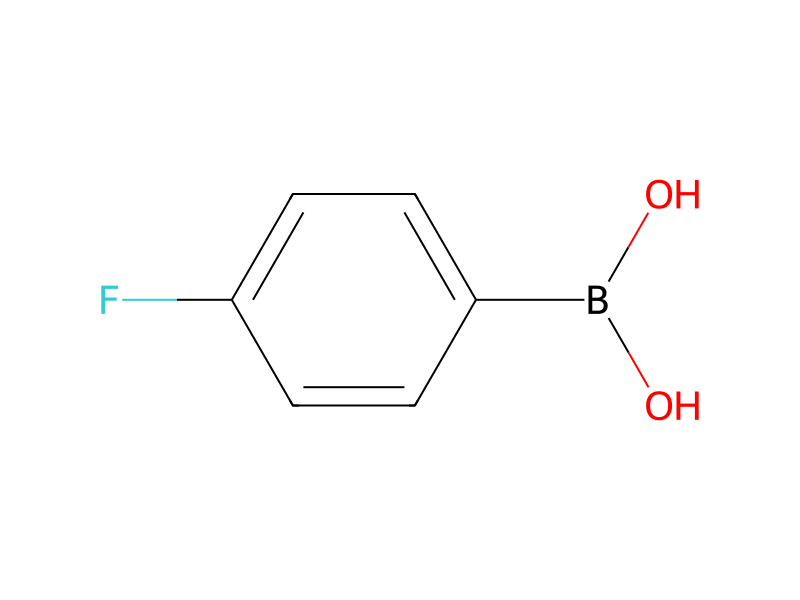
Br[C:2]1[CH:25]=[CH:24][C:5]([C:6]([N:19]2[CH:23]=[CH:22][CH:21]=[N:20]2)([C:13]2[CH:18]=[CH:17][CH:16]=[CH:15][CH:14]=2)[C:7]2[CH:12]=[CH:11][CH:10]=[CH:9][CH:8]=2)=[CH:4][CH:3]=1.[F:26][C:27]1[CH:32]=[CH:31][C:30](B(O)O)=[CH:29][CH:28]=1.C(=O)([O-])[O-].[Cs+].[Cs+]>CN(C)C=O>[F:26][C:27]1[CH:32]=[CH:31][C:30]([C:22]2[CH:21]=[N:20][N:19]([C:6]([C:13]3[CH:18]=[CH:17][CH:16]=[CH:15][CH:14]=3)([C:7]3[CH:12]=[CH:11][CH:10]=[CH:9][CH:8]=3)[C:5]3[CH:24]=[CH:25][CH:2]=[CH:3][CH:4]=3)[CH:23]=2)=[CH:29][CH:28]=1To a suspension of 4-bromo-trityl-1H-pyrazole (0.7 g) in N,N-dimethylformamide (14 ml) was added 4-fluorophenylboronic acid (0.377 g), cesium carbonate (1.758 g), and tetrakis triphenylphosphine palladium (0.208 g). The resulting suspension was stirred at room temperature for 10 min. The irradiation of microwaves at 160° C. for 10 min was sufficient to complete a reaction in the suspension. The product was filtered through silica gel, diluted in ethyl acetate (30 ml) and washed with saturated ammonium chloride solution (30 ml) and then with brine (30 ml). The washed organic layer thus formed was dried over anhydrous magnesium sulfate and concentrated by evaporation in a vacuum. The residue thus obtained was separated using silica gel chromatography to produce 4-(4-fluorophenyl)-1-trityl-1H-pyrazole (yield 51%).