StartseiteMCPWorkbenchSkills
StartseiteWorkbenchBenachrichtigungenMein Bereich
llms.txt · MCP-AnleitungDatenschutz · Nutzungsbedingungen · Supportv1.8.3
  1. Startseite
  2. /Reaktion

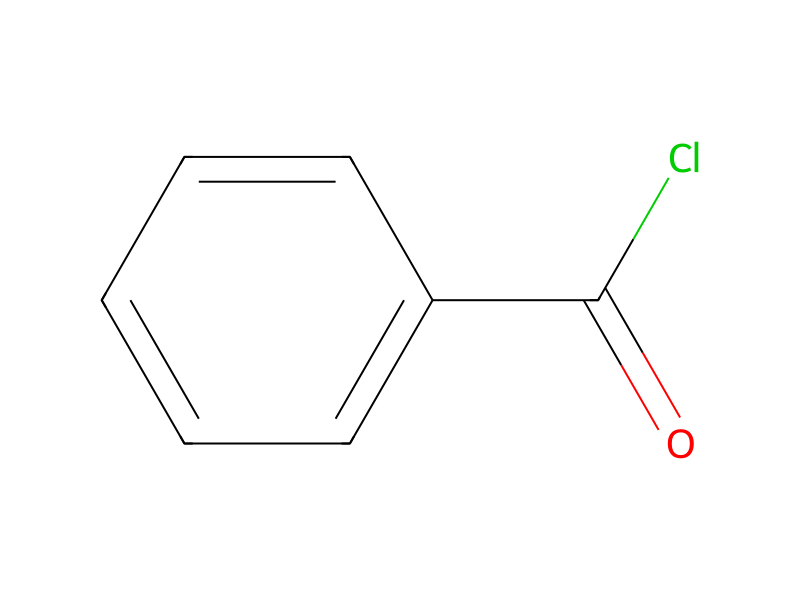
Benzoyl chloride → 3,6-dihydro-2H-pyridin-1-yl(phenyl)methanone

HRID 244272
Drucken

Reaktionsgleichung

Reaktionsgleichung von HRID 244272
[NH:1]1[CH2:6][CH:5]=[CH:4][CH2:3][CH2:2]1.C(N(CC)CC)C.[C:14](Cl)(=[O:21])[C:15]1[CH:20]=[CH:19][CH:18]=[CH:17][CH:16]=1>C(Cl)Cl>[N:1]1([C:14]([C:15]2[CH:20]=[CH:19][CH:18]=[CH:17][CH:16]=2)=[O:21])[CH2:2][CH2:3][CH:4]=[CH:5][CH2:6]1
KomponentenVersuchsvorschriftAufarbeitungQuellen und NachweiseNotizen zur Reaktion

Komponenten

5

Edukt 3

HCID 7412Benzoyl chlorideHCID 8471TriethylamineHCID 127501,2,3,6-Tetrahydropyridine

Produkt 1

HCID 5700373,6-dihydro-2H-pyridin-1-yl(phenyl)methanoneAusbeute 101 %

Reagenzien, Katalysatoren, Lösungsmittel 1

HCID 6344DichloromethaneLösungsmittel

Versuchsvorschrift

Into a solution of 1,2,3,6-tetrahydropyridine (1.00 g, 12.0 mmol) and triethylamine (3 mL) in CH2Cl2 (30 mL), benzoyl chloride (1.69 g, 12.0 mmol) was added dropwise at 0° C. The reaction mixture was stirred at room temperature for 2 hrs and washed with saturated Na2CO3 (20 mL×3) and brine solution (20 mL), dried over Na2SO4 and concentrated under vacuum to afford crude product. The crude product was purified by silica gel column chromatography using hexane/ethyl acetate (10/3, v/v) to afford target product as a colorless oil (2.27 g, 100%). 1H NMR (CDCl3): δ 2.16-2.25 (m, 2H), 3.46-4.20 (m, 4H), 5.53-5.91 (m, 2H), 7.29-7.53 (m, 5H).

Aufarbeitung

  1. washwashed with saturated Na2CO3 (20 mL×3) and brine solution (20 mL)
  2. dry with materialdried over Na2SO4
  3. concentrationconcentrated under vacuum
  4. customto afford crude product
  5. customThe crude product was purified by silica gel column chromatography

Quellen und Nachweise

ORD-Eintrag
ord-97d67a3742724e069ea3b1124c83fa53
Quelldatensatz
uspto-grants-2014_02
DOI
10.6084/m9.figshare.5104873.v1
Patentnummer
US08658131B2

Notizen zur Reaktion

Auf dieser SeiteKomponentenVersuchsvorschriftAufarbeitungQuellen und NachweiseNotizen zur Reaktion