Reaktionsgleichung

[CH:1]([C:4]1[CH:5]=[C:6]([CH:9]=[C:10]([CH:14]([CH3:16])[CH3:15])[C:11]=1[O:12][CH3:13])[CH:7]=O)([CH3:3])[CH3:2].[Cl:17][C:18]1[CH:26]=[C:25]2[C:21]([CH2:22][C:23](=[O:27])[NH:24]2)=[CH:20][CH:19]=1>>[Cl:17][C:18]1[CH:26]=[C:25]2[C:21]([C:22](=[CH:7][C:6]3[CH:5]=[C:4]([CH:1]([CH3:3])[CH3:2])[C:11]([O:12][CH3:13])=[C:10]([CH:14]([CH3:16])[CH3:15])[CH:9]=3)[C:23](=[O:27])[NH:24]2)=[CH:20][CH:19]=1Komponenten
3
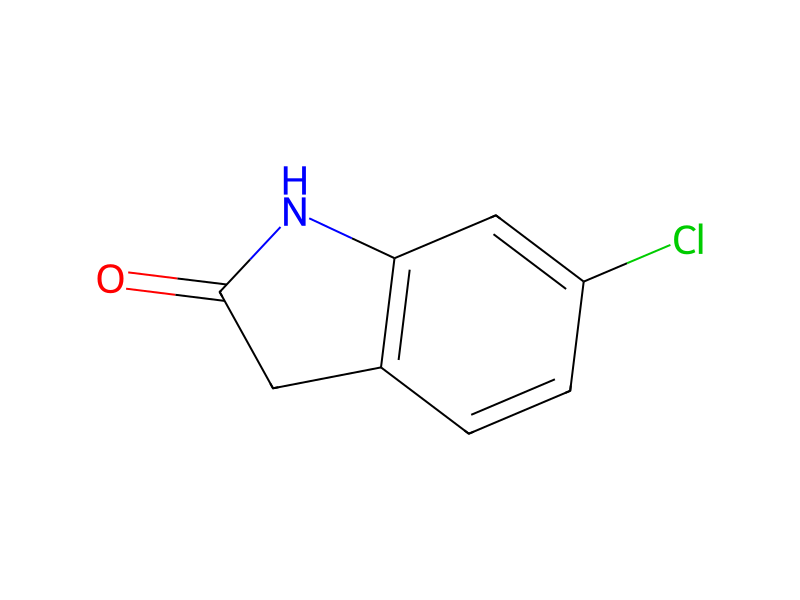


Versuchsvorschrift
3,5-Diisopropyl-4-methoxybenzaldehyde was condensed with 6-chloro-2-oxindole to give 0.3 g of 6-chloro-3-(3,5-diisopropyl-4-methoxybenzylidene)-1,3-dihydroindol-2-one as a yellow-orange solid.
Quellen und Nachweise
- ORD-Eintrag
- ord-f486eafca25143db8148dbab004e9cd8
- Quelldatensatz
- uspto-grants-2005_02
- Patentnummer
- US06855730B2
Verknüpfte Notizen
Wird geladen…