Reaktionsgleichung

C(OC(=O)[NH:7][CH:8]1[CH2:12][CH2:11][CH:10]([NH:13][C:14]([C:16]2[C:24]3[C:19](=[N:20][CH:21]=[C:22]([C:25]4[C:33]5[C:28](=[CH:29][C:30]([Cl:34])=[CH:31][CH:32]=5)[N:27]([CH3:35])[N:26]=4)[N:23]=3)[N:18](COCC[Si](C)(C)C)[CH:17]=2)=[O:15])[CH2:9]1)(C)(C)C.FC(F)(F)C(O)=O.C(N)CN>ClCCl>[NH2:7][CH:8]1[CH2:12][CH2:11][CH:10]([NH:13][C:14]([C:16]2[C:24]3[C:19](=[N:20][CH:21]=[C:22]([C:25]4[C:33]5[C:28](=[CH:29][C:30]([Cl:34])=[CH:31][CH:32]=5)[N:27]([CH3:35])[N:26]=4)[N:23]=3)[NH:18][CH:17]=2)=[O:15])[CH2:9]1Komponenten
Edukt 3
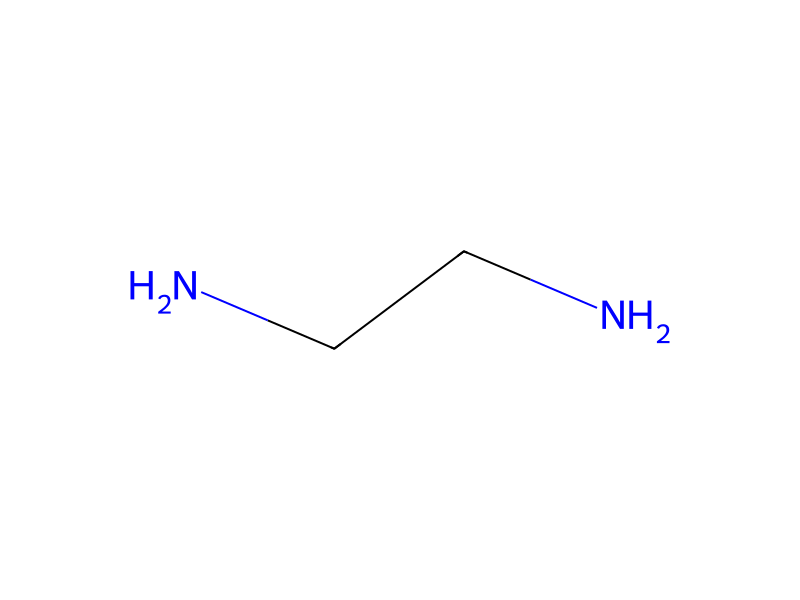


Produkt 1

Reagenzien, Katalysatoren, Lösungsmittel 1

Versuchsvorschrift
In a round-bottomed flask, (3-{[2-(6-chloro-1-methyl-1H-indazol-3-yl)-5-(2-trimethylsilanyl-ethoxymethyl)-5H-pyrrolo[2,3-b]pyrazine-7-carbonyl]-amino}-cyclopentyl)-carbamic acid tert-butyl ester (80 mg, 0.125 mmol) was dissolved in dichloromethane (0.7 ml) and trifluoroacetic acid (0.4 ml, 5.0 mmol) was added. The reaction mixture was stirred at room temperature for 3.5 h then concentrated. The residue was dissolved in dichloromethane (0.7 ml) and ethylenediamine (0.5 ml, 7.5 mmol) was added. The solution was stirred at room temperature for 2 h then quenched with water and diluted with ethyl acetate. The resultant suspension was filtered, washed with hot water and ethyl acetate and dried under high vacuum to provide 40 mg (74%) of 2-(6-chloro-1-methyl-1H-indazol-3-yl)-5H-pyrrolo[2,3-b]pyrazine-7-carboxylic acid (3-amino-cyclopentyl)-amide as an off-white powder. MS: (M+H)+=410; 1H NMR (DMSO-d6, 300 MHz): δ (ppm) 9.07 (s, 1H), 8.55 (d, J=8.7 Hz, 1H), 8.40 (s, 1H), 8.24 (d, J=7.6 Hz, 1H), 7.99 (s, 1H), 7.40 (d, J=9.1 Hz, 1H), 5.54 (br. s, 2H), 4.34-4.45 (m, 1H), 4.17 (s, 3H), 3.36-3.44 (m, 1H), 2.25-2.37 (m, 1H), 2.03-2.16 (m, 1H), 1.71-1.88 (m, 2H), 1.51-1.62 (m, 1H), 1.32-1.43 (m, 1H). The isolated product was determined to be a single diastereomer of unknown relative stereochemistry by NMR analysis.
Aufarbeitung
- concentrationthen concentrated
- dissolutionThe residue was dissolved in dichloromethane (0.7 ml)
- stirringThe solution was stirred at room temperature for 2 h
- customthen quenched with water
- additiondiluted with ethyl acetate
- filtrationThe resultant suspension was filtered
- washwashed with hot water and ethyl acetate
- customdried under high vacuum
Quellen und Nachweise
- ORD-Eintrag
- ord-1b6d7b0f738045208712b4126fd68c21
- Quelldatensatz
- uspto-grants-2014_02
- Patentnummer
- US08658646B2
Verknüpfte Notizen
Wird geladen…