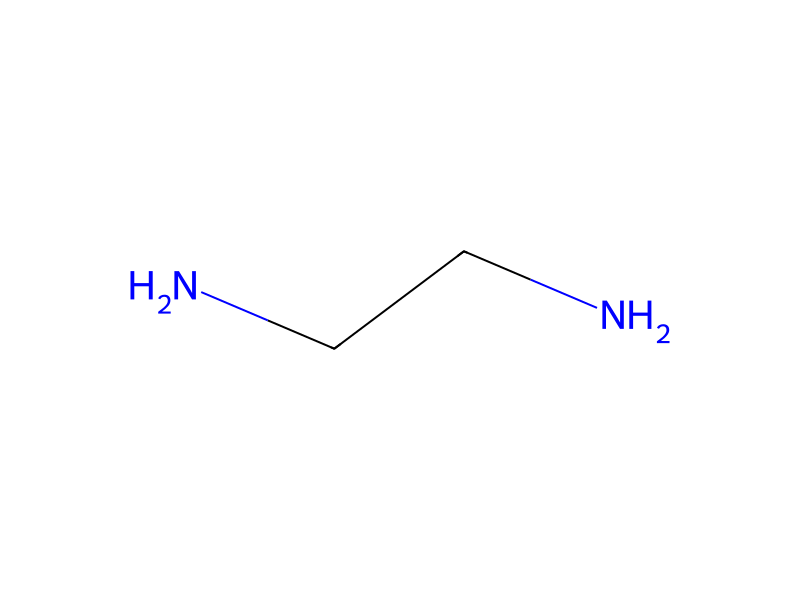
[OH:1][C@@H:2]1[CH2:6][CH2:5][C@H:4]([NH:7][C:8]([C:10]2[C:18]3[C:13](=[N:14][CH:15]=[C:16]([C:19]4[C:27]5[C:22](=[CH:23][C:24]([F:28])=[CH:25][CH:26]=5)[N:21]([CH3:29])[N:20]=4)[N:17]=3)[N:12](COCC[Si](C)(C)C)[CH:11]=2)=[O:9])[CH2:3]1.FC(F)(F)C(O)=O.C(N)CN>ClCCl>[OH:1][C@@H:2]1[CH2:6][CH2:5][C@H:4]([NH:7][C:8]([C:10]2[C:18]3[C:13](=[N:14][CH:15]=[C:16]([C:19]4[C:27]5[C:22](=[CH:23][C:24]([F:28])=[CH:25][CH:26]=5)[N:21]([CH3:29])[N:20]=4)[N:17]=3)[NH:12][CH:11]=2)=[O:9])[CH2:3]1In a round-bottomed flask, 2-(6-fluoro-1-methyl-1H-indazol-3-yl)-5-(2-trimethylsilanylethoxymethyl)-5H-pyrrolo[2,3-b]pyrazine-7-carboxylic acid (cis-3-hydroxy-cyclopentyl)-amide (49 mg, 0.093 mmol) was dissolved in dichloromethane (0.5 ml) and trifluoroacetic acid (0.3 ml, 3.8 mmol) was added. The orange reaction mixture was stirred at room temperature for 2 h then concentrated. The residue was dissolved in dichloromethane (0.5 ml) and ethylenediamine (0.4 ml, 5.7 mmol) was added. The light yellow solution was stirred at room temperature for 1 h then quenched with water and diluted with ethyl acetate. The resulting precipitate was filtered, washed with hot water and ethyl acetate and dried under high vacuum to provide 29 mg (75%) of 2-(6-fluoro-1-methyl-1H-indazol-3-yl)-5H-pyrrolo[2,3-b]pyrazine-7-carboxylic acid (cis-3-hydroxy-cyclopentyl)-amide as an off-white powder. MS: (M+H)+=395; 1H NMR (DMSO-d6, 300 MHz): δ (ppm) 12.42 (br. s., 1H), 9.11 (s, 1H), 8.59 (dd, J=9.1, 5.3 Hz, 1H), 8.42 (s, 1H), 8.20 (d, J=8.3 Hz, 1H), 7.68 (dd, J=9.6, 2.1 Hz, 1H), 7.24 (td, J=9.2, 2.1 Hz, 1H), 4.78 (br. s., 1H), 4.36-4.52 (m, 1H), 4.22 (br. s., 1H), 4.15 (s, 3H), 2.30 (ddd, J=13.7, 8.2, 5.7 Hz, 1H), 2.04-2.19 (m, 1H), 1.67-1.86 (m, 3H), 1.49-1.63 (m, 1H).