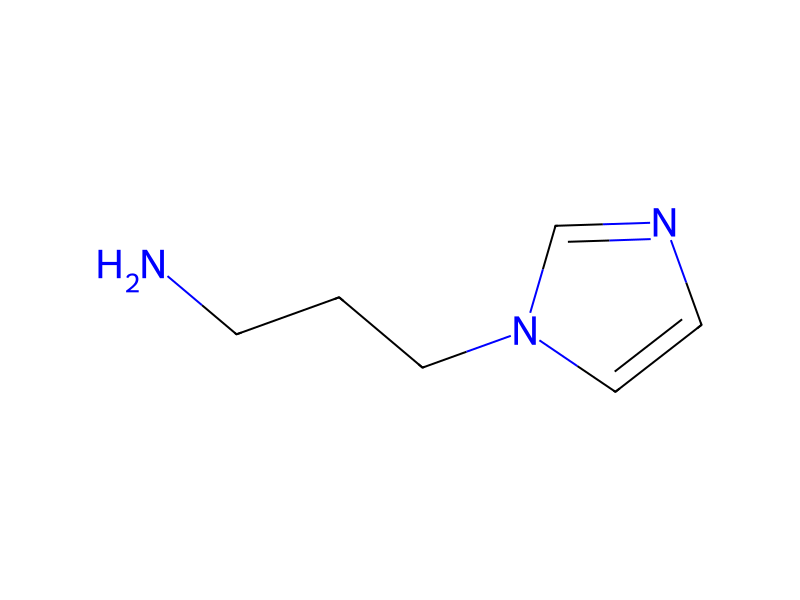
[Cl:1][C:2]1[CH:3]=[C:4]([CH:8]2[C:13]([C:14]([OH:16])=O)=[C:12]([CH3:17])[NH:11][C:10](=[O:18])[NH:9]2)[CH:5]=[CH:6][CH:7]=1.[NH2:19][CH2:20][CH2:21][CH2:22][N:23]1[CH:27]=[CH:26][N:25]=[CH:24]1.CCN=C=NCCCN(C)C.Cl>CN(C=O)C>[N:23]1([CH2:22][CH2:21][CH2:20][NH:19][C:14]([C:13]2[CH:8]([C:4]3[CH:5]=[CH:6][CH:7]=[C:2]([Cl:1])[CH:3]=3)[NH:9][C:10](=[O:18])[NH:11][C:12]=2[CH3:17])=[O:16])[CH:27]=[CH:26][N:25]=[CH:24]1200 mg (0.750 mmol) of 4-(3-chlorophenyl)-6-methyl-2-oxo-1,2,3,4-tetrahydropyrimidine-5-carboxylic acid and 113 mg (0.900 mmol) of 1-(3-aminopropyl)imidazole were dissolved in 10 ml of DMF. 216 mg (1.13 mmol) of WSC hydrochloride was added to the obtained solution under cooling with ice, and they were stirred at room temperature overnight. After the concentration under reduced pressure, the reaction mixture was diluted with ethyl acetate and then washed with saturated aqueous sodium hydrogencarbonate solution and saturated aqueous sodium chloride solution. The organic layer was dried over anhydrous magnesium sulfate and then concentrated under reduced pressure. The residue was purified by the silica gel chromatography (dichloromethane/methanol=50/1 to 10/1) to obtain the title compound.
Wird geladen…