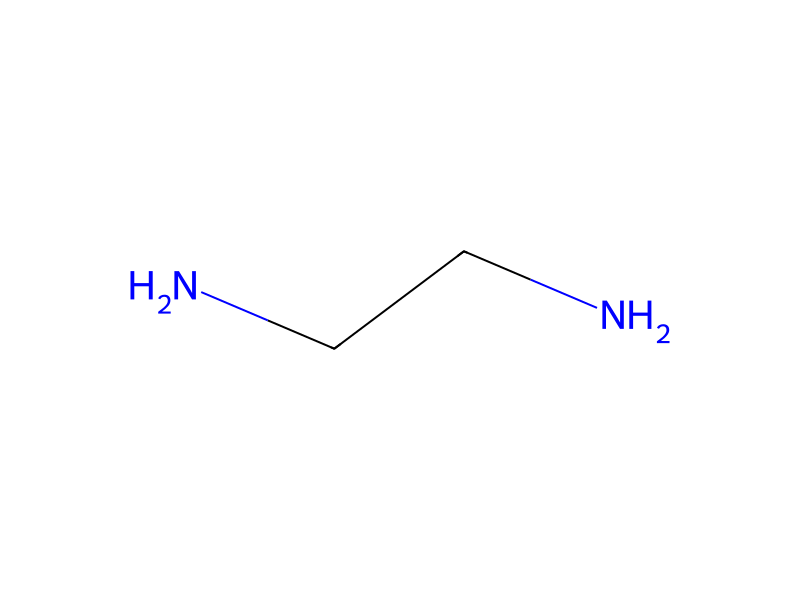
[Cl:1][C:2]1[CH:10]=[C:9]2[C:5]([C:6]([C:12]3[N:17]=[C:16]4[C:18]([C:29]([NH:31][CH2:32][CH:33]5[CH2:35][CH2:34]5)=[O:30])=[CH:19][N:20](COCC[Si](C)(C)C)[C:15]4=[N:14][CH:13]=3)=[N:7][N:8]2[CH3:11])=[CH:4][CH:3]=1.C(O)(C(F)(F)F)=O.C(N)CN>ClCCl>[Cl:1][C:2]1[CH:10]=[C:9]2[C:5]([C:6]([C:12]3[N:17]=[C:16]4[C:18]([C:29]([NH:31][CH2:32][CH:33]5[CH2:34][CH2:35]5)=[O:30])=[CH:19][NH:20][C:15]4=[N:14][CH:13]=3)=[N:7][N:8]2[CH3:11])=[CH:4][CH:3]=1To a stirred solution of 2-(6-chloro-1-methyl-1H-indazol-3-yl)-N-(cyclopropylmethyl)-5-((2-(trimethylsilyl)ethoxy)methyl)-5H-pyrrolo[3,2-b]pyrazine-7-carboxamide (0.049 g, 0.096 mmol) in dichloromethane (5 mL) was added TFA (0.55 g, 0.36 mL, 4.78 mmol) at 20° C. After 18 h, the mixture was concentrated in vacuo. The residue was diluted with dichloromethane and concentrated again. The residue was then suspended in dichloromethane (5 mL) and ethylenediamine (0.29 g, 0.32 mL, 4.78 mmol) was added. The mixture was stirred for 18 h, then concentrated in vacuo. The residue was triturated with water and collected by filtration, washed with water and dried in a vacuum oven to give 2-(6-chloro-1-methyl-1H-indazol-3-yl)-N-(cyclopropylmethyl)-5H-pyrrolo[3,2-b]pyrazine-7-carboxamide (0.034 g, 0.089 mmol, 93%) as a yellow solid. MS (M+H)+=381; 1H NMR (DMSO-d6) δ: 9.10 (s, 1H), 8.47 (d, J=8.7 Hz, 2H), 8.44 (s, 1H), 8.21 (t, J=5.4 Hz, 1H), 8.00 (d, J=1.3 Hz, 2H), 7.31 (dd, J=8.6, 1.8 Hz, 2H), 4.18 (s, 3H), 3.33-3.40 (m, 2H), 1.04-1.28 (m, 1H), 0.48-0.65 (m, 2H), 0.27-0.41 (m, 2H).