Reaktionsgleichung
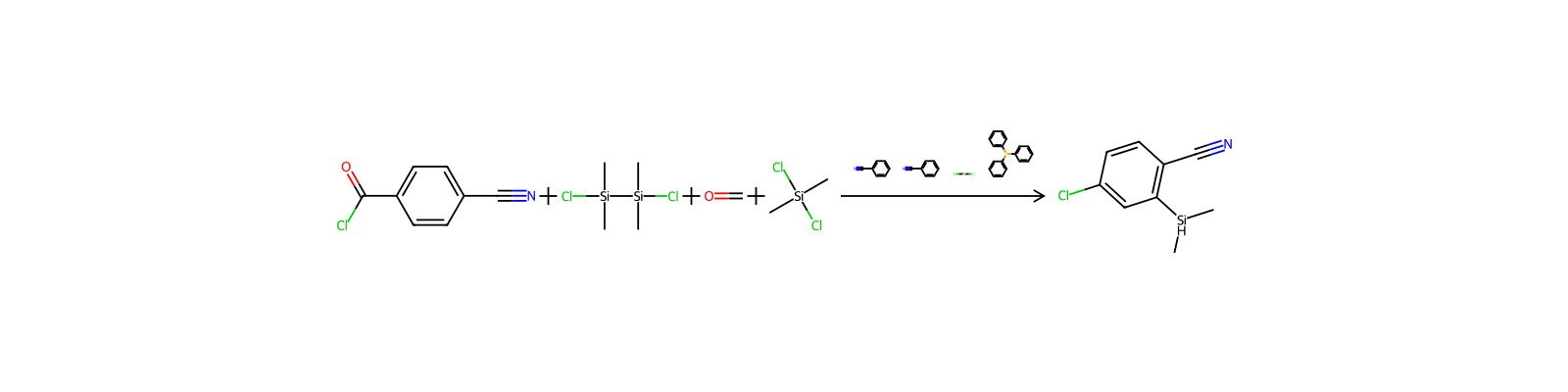
[C:1]([C:3]1[CH:11]=[CH:10][C:6](C(Cl)=O)=[CH:5][CH:4]=1)#[N:2].Cl[Si:13]([CH3:19])([CH3:18])[Si](C)(C)Cl.[C]=O.C[Si](C)(Cl)[Cl:24]>C1C=CC(C#N)=CC=1.C1C=CC(C#N)=CC=1.Cl[Pd]Cl.C1(P(C2C=CC=CC=2)C2C=CC=CC=2)C=CC=CC=1>[Cl:24][C:6]1[CH:10]=[CH:11][C:3]([C:1]#[N:2])=[C:4]([SiH:13]([CH3:19])[CH3:18])[CH:5]=1Komponenten
Edukt 4


Produkt 1

Reagenzien, Katalysatoren, Lösungsmittel 2

Reaktionsbedingungen
- Temperatur
- 135 °C
Versuchsvorschrift
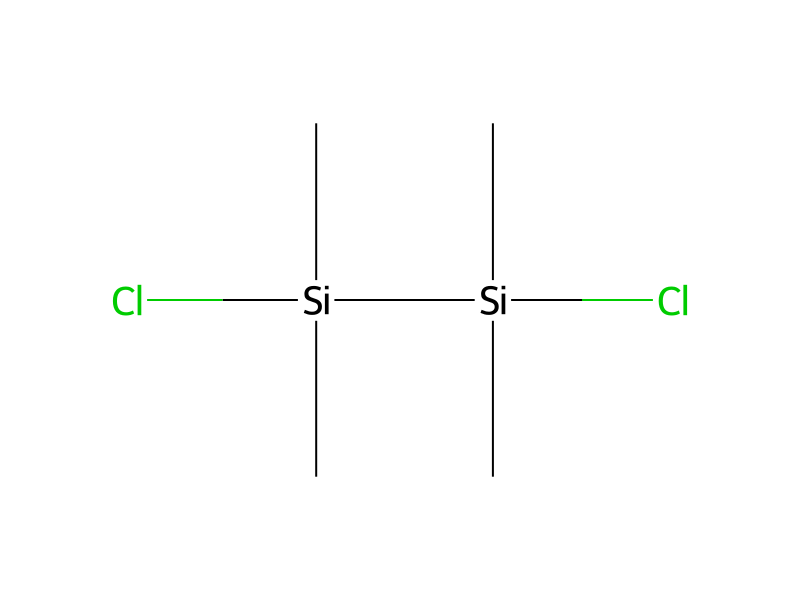
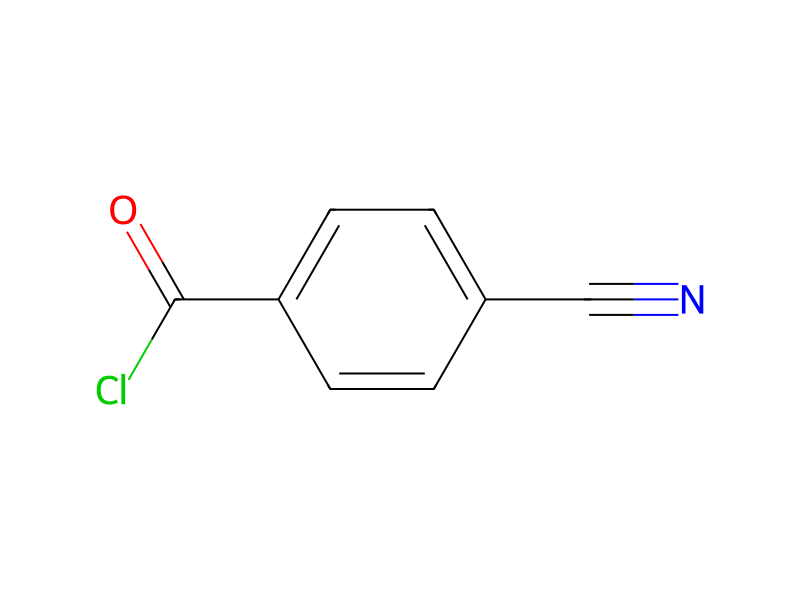
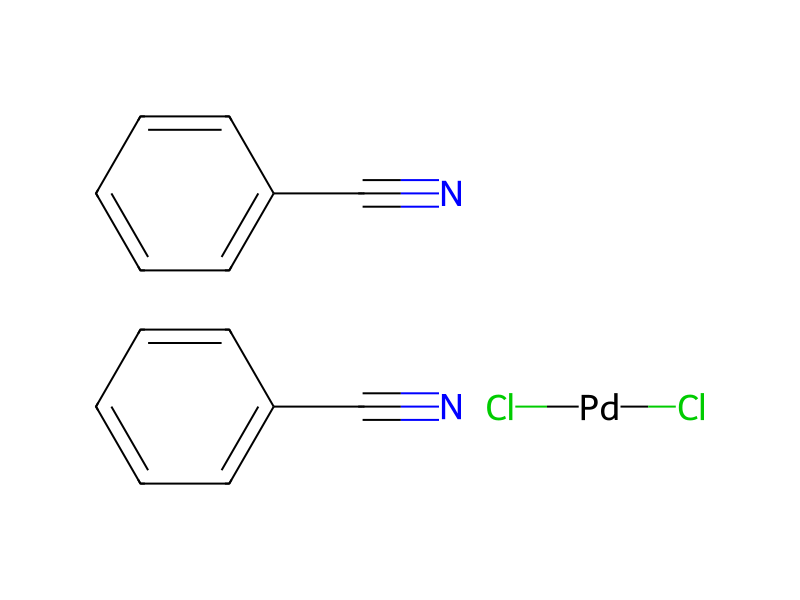
A reaction mixture containing 10 gm (6×10⁻² mole) of p-cyanobenzoyl chloride and 15 gm (1.25 mole equivalent) of 1,2-dichlorotetramethyldisilane was heated to 135° C. during which time the solution became homogeneous. A cocatalyst mixture containing 200 mg. bis(benzonitrile)palladiumdichloride (1 mole %) and 274 mg triphenylphosphine (2 mole %) was then introduced. Carbon monoxide gas evolution began immediately and the reaction was heated at 140° C. for 12 hours while dimethyldichlorosilane was continuously removed. Vacuum distillation gave 7 gm (60% isolated yield) of 4-chlorodimethylsilylbenzonitrile, bp. 93°/0.1 torr, m.p. 40°-43° C. The resulting chlorodimethylsilylbenzonitrile, in the form of a low melting high moisture sensitive solid was hydrolyzed to the corresponding 1,3-bis(4'-benzonitrile)tetramethyldisiloxane in the form of a colorless liquid. The identity of the disiloxane was further confirmed by its NMR and IR spectra.
Aufarbeitung
- additionA cocatalyst mixture containing 200 mg
- customwas continuously removed
- distillationVacuum distillation
Quellen und Nachweise
- ORD-Eintrag
- ord-cb6a7eabdcee432a8f29787889f303d6
- Quelldatensatz
- uspto-grants-1987_11
- Patentnummer
- US04709054
Verknüpfte Notizen
Wird geladen…