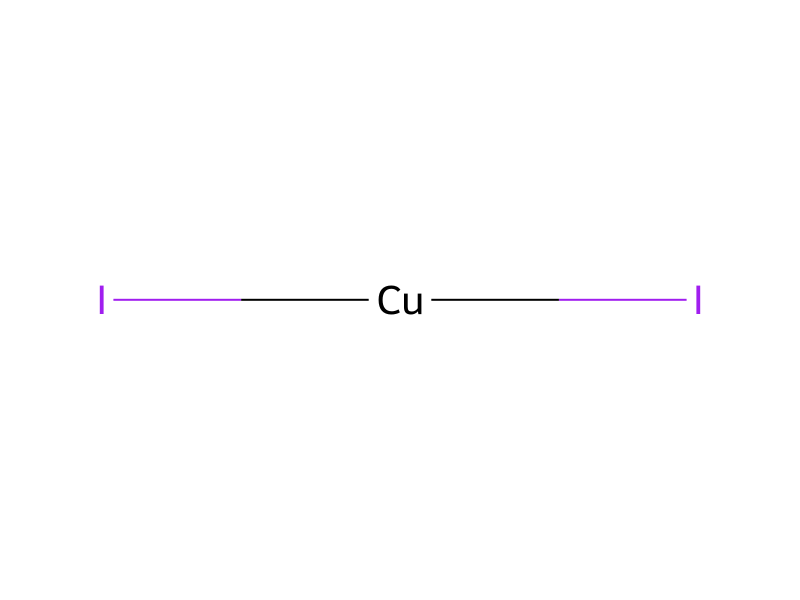
[Cl:1][C:2]1[CH:7]=[CH:6][C:5](I)=[CH:4][N:3]=1.C(=O)([O-])[O-].[K+].[K+].[Cl:15][C:16]1[CH:28]=[C:27]([Cl:29])[CH:26]=[CH:25][C:17]=1[CH2:18][NH:19][C@H:20]1[CH2:24][CH2:23][NH:22][CH2:21]1.C(O)CO>C(O)(C)C.[Cu](I)I>[Cl:1][C:2]1[N:3]=[CH:4][C:5]([N:22]2[CH2:23][CH2:24][CH:20]([NH:19][CH2:18][C:17]3[CH:25]=[CH:26][C:27]([Cl:29])=[CH:28][C:16]=3[Cl:15])[CH2:21]2)=[CH:6][CH:7]=1Add 2-chloro-5-iodopyridine (193 mg, 0.84 mmol) to a mixture of potassium carbonate (344 mg, 1.61 mmol) and copper iodide (7 mg, 5% mol) and purge with nitrogen for 10 min. Add a solution of (S)-(2,4-dichlorobenzyl)-pyrrolidin-3-ylamine (238 mg, 0.97 mmol) in ethylene glycol (0.09 mL, 1.61 mmol) and isopropanol (1 mL). Stir at 80° C. for 4 days. Add water (2 mL) and extract with ethyl acetate, wash with saturated aqueous sodium chloride, dry (magnesium sulfate), concentrate and chromatograph using preparative mass guided chromatography to give the title compound. Form the hydrochloride by essentially the procedure in Example 1 to give 1H NMR (400 MHz, MeOH-d4) δ 7.79 (1H, d, J=2.69 Hz), 7.63-7.70 (2H, m), 7.49 (1H, dd, J=8.31, 1.96 Hz), 7.34 (1H, d, J=8.80 Hz), 7.21 (1H, dd, J=8.80, 2.93 Hz), 4.48 (2H, s), 4.17-4.24 (1H, m), 3.72-3.79 (1H, m), 3.61-3.68 (2H, m), 3.38-3.44 (1H, m), 2.59-2.69 (1H, m), 2.32-2.33 (1H, m), 2.32-2.40 (1H, m), MS (ES): m/z=356 [M+].