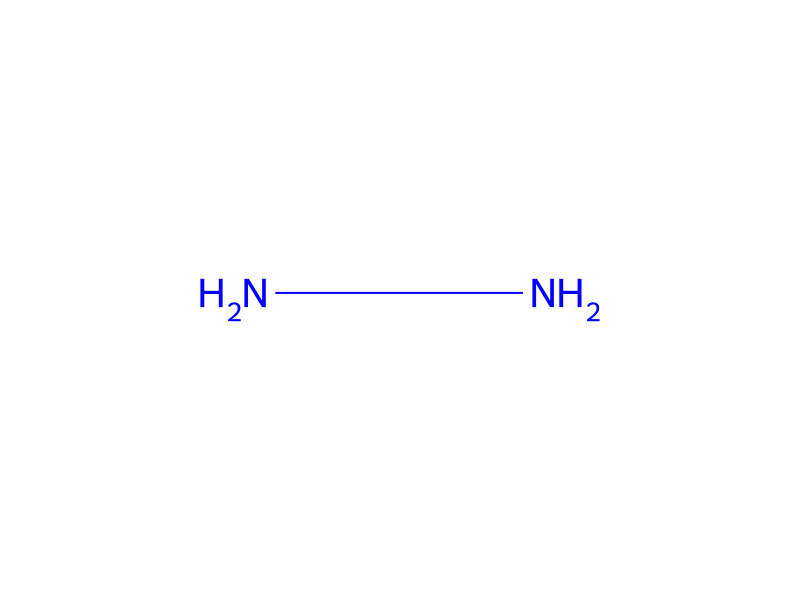
Hydrazine → 3-Hydrazino-6,7-dihydro-5h-benzo[6,7]cyclohepta[1,2-c]pyridazine
HRID 252914
Reaktionsgleichung

Cl[C:2]1[N:7]=[N:6][C:5]2[C:8]3[CH:16]=[CH:15][CH:14]=[CH:13][C:9]=3[CH2:10][CH2:11][CH2:12][C:4]=2[CH:3]=1.[NH2:17][NH2:18]>C(O)C>[NH:17]([C:2]1[N:7]=[N:6][C:5]2[C:8]3[CH:16]=[CH:15][CH:14]=[CH:13][C:9]=3[CH2:10][CH2:11][CH2:12][C:4]=2[CH:3]=1)[NH2:18]Komponenten
4
Edukt 2

Produkt 1

Reagenzien, Katalysatoren, Lösungsmittel 1

Versuchsvorschrift
Alternatively, 3-chloro-6,7-dihydro-5H-benzo[6,7]cyclohepta[1,2-c]pyridazine (1.6 g) was heated with anhydrous hydrazine (4 mL) in ethanol (50 mL) at 100° C. for 4.75 h. The solvent was removed under vacuum. The residue was partitioned between chloroform and 1M saturated aqueous potassium carbonate. The organic layer was dried over anhydrous sodium sulfate and concentrated under vacuum to give 3-hydrazino-6,7-dihydro-5H-benzo[6,7]cyclohepta[1,2-c]pyridazine as a brown solid; 1H NMR (CDCl3, 300 MHz) 7.74 (m, 1H), 7.30 (m, 2H), 7.17 (m, 1H), 6.92 (s, 1H), 2.49 (m, 2H), 2.39 (m, 2H), 2.12 (m, 2H) ppm; MS (ES) 227 (M+H).