Reaktionsgleichung
C(OC(=O)CN)C.C(O)(=O)CCCCCCC/C=C\CCCCCCCC.CCN=C=NCCCN(C)C.NCC(N)=O.[C:44]([N:63]([CH2:65][C:66]([OH:68])=[O:67])C)(=[O:62])[CH2:45][CH2:46][CH2:47][CH2:48][CH2:49][CH2:50][CH2:51]/[CH:52]=[CH:53]\[CH2:54][CH2:55][CH2:56][CH2:57][CH2:58][CH2:59][CH2:60][CH3:61]>CCO>[C:44]([NH:63][CH2:65][C:66]([OH:68])=[O:67])(=[O:62])[CH2:45][CH2:46][CH2:47][CH2:48][CH2:49][CH2:50][CH2:51]/[CH:52]=[CH:53]\[CH2:54][CH2:55][CH2:56][CH2:57][CH2:58][CH2:59][CH2:60][CH3:61]Komponenten
7
Edukt 5


Produkt 1

Reagenzien, Katalysatoren, Lösungsmittel 1

Versuchsvorschrift
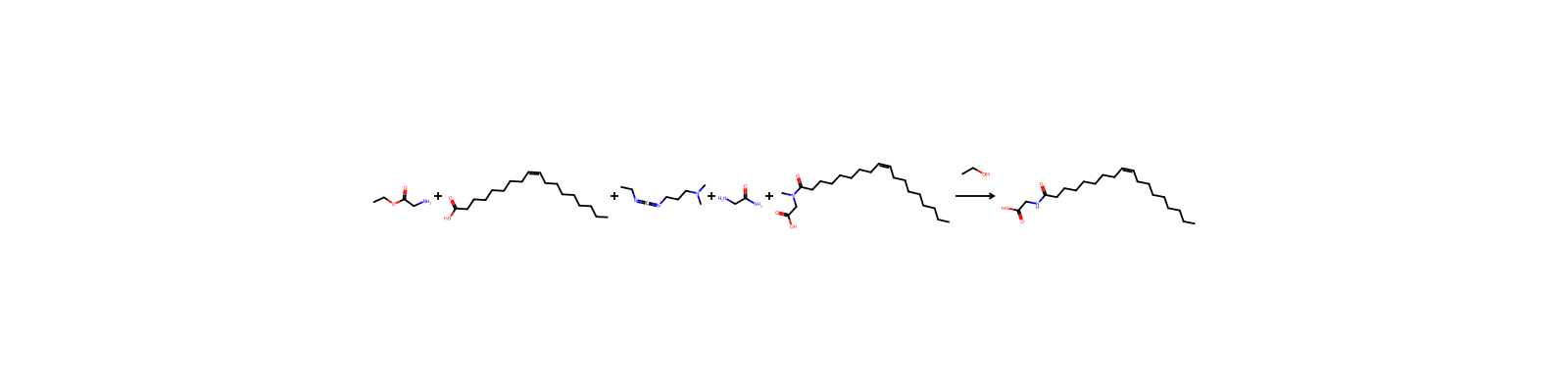
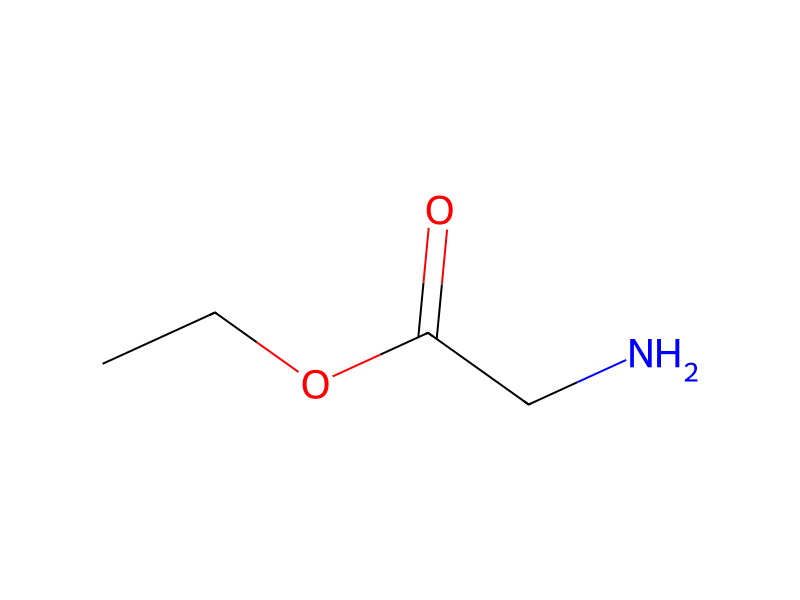
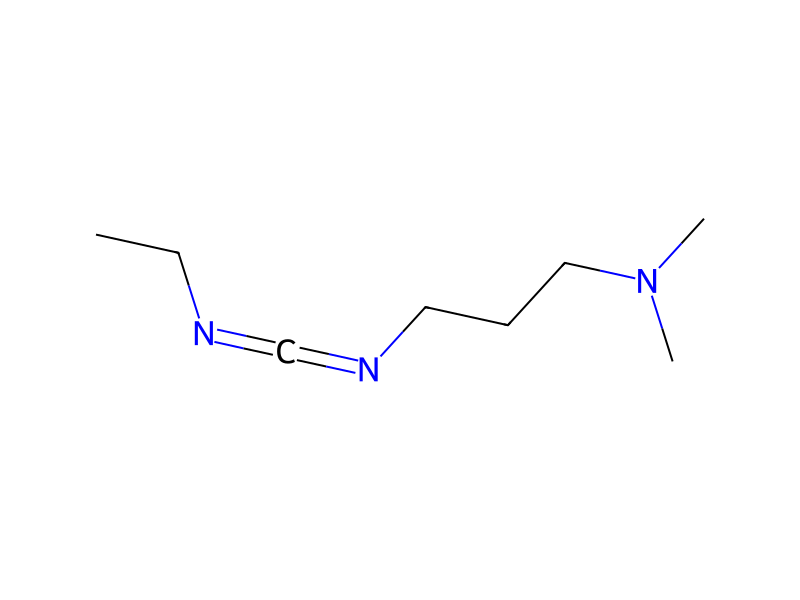
N-Oleoyl glycine (FIG. 7) was prepared by coupling glycine ethyl ester to oleic acid with EDCI (Cravatt et al. (1996) J. Am. Chem. Soc. 118, 580-590; Patterson et al. (1996) J. Am. Chem. Soc. 118, 5938-5945) followed by sequential transformation to the carboxylic acid (LiOH) and glycinamide (EDCI, NH4OH;). N-Oleoyl sarcosine was purchased (Pfaltz and Bauer) and converted to its ethyl ester by coupling with EtOH (DCC).
Quellen und Nachweise
- ORD-Eintrag
- ord-f5ac59a7fb8540c8a6d0e1f04c8cecc0
- Quelldatensatz
- uspto-grants-2005_02
- Patentnummer
- US06858649B1
Verknüpfte Notizen
Wird geladen…