Reaktionsgleichung

[C:1]1(=[O:8])[NH:7][CH2:6][CH2:5][CH2:4][CH2:3][CH2:2]1.NCCCCCC(O)=O.[C:18]([OH:27])(=[O:26])[CH2:19][CH2:20][CH2:21][CH2:22][C:23]([OH:25])=[O:24].[NH2:28][CH2:29][CH2:30][CH2:31][CH2:32][CH2:33][CH2:34][NH2:35]>>[CH2:4]1[CH2:5][CH2:6][NH:7][C:1](=[O:8])[CH2:2][CH2:3]1.[CH2:32]([CH2:33][CH2:34][NH2:35])[CH2:31][CH2:30][CH2:29][NH2:28].[CH2:20]([CH2:19][C:18]([OH:27])=[O:26])[CH2:21][CH2:22][C:23]([OH:25])=[O:24]Komponenten

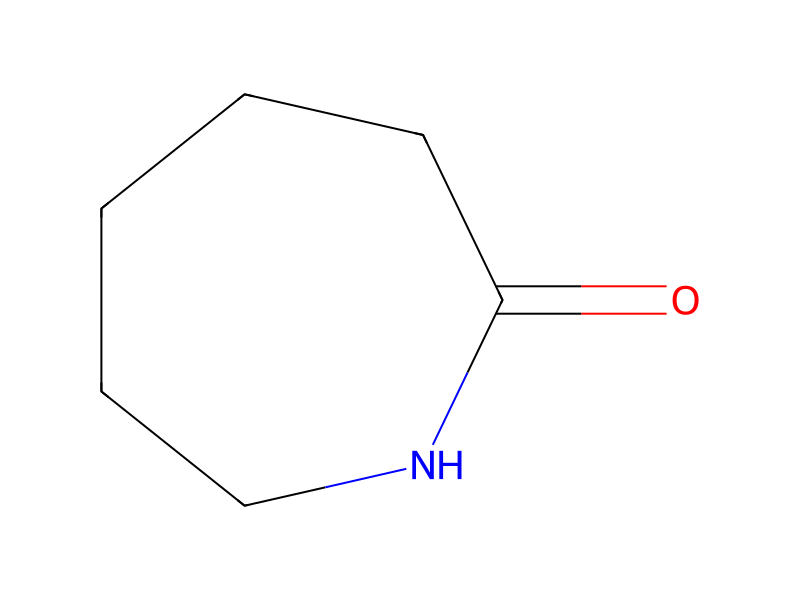


Versuchsvorschrift
The low molecular weight polyamides are generally prepared by melt phase polymerization from a diacid-diamine complex which may be prepared either in situ or in a separate step. In either method, the diacid and diamine are used as starting materials. Alternatively, an ester form of the diacid may be used, preferably the dimethyl ester. If the ester is used, the reaction must be carried out a a relatively low temperature, generally 80° to 120° C., until the ester is converted to an amide. The mixture is then heated to the polymerization temperature. In the case of polycaprolactam, either caprolactam or 6-aminocaproic acid can be used as a starting material and the polymerization may be catalyzed by the addition of adipic acid/hexamethylene diamine salt which results in a nylon 6/66 copolymer. When the diacid diamine complex is used, the mixture is heated to melting and stirred until equilibration.
Aufarbeitung
- customphase polymerization from a diacid-diamine complex which
- custommay be prepared either in situ or in a separate step
- customthe reaction
- customa relatively low temperature, generally 80° to 120° C.
- temperatureThe mixture is then heated to the polymerization temperature
- customthe polymerization
Quellen und Nachweise
- ORD-Eintrag
- ord-2a560e2dc8ff40bfbb6c55ffddc9198e
- Quelldatensatz
- uspto-grants-1993_11
- Patentnummer
- US05258233
Verknüpfte Notizen
Wird geladen…