StartseiteMCPWorkbenchSkills
StartseiteWorkbenchBenachrichtigungenMein Bereich
llms.txt · MCP-AnleitungDatenschutz · Nutzungsbedingungen · Supportv1.8.3
  1. Startseite
  2. /Reaktion

Oxalic Acid → 2-(7-Bromo-1,8-naphthyridin-2-yl)-3-(4-methylpiperazin-1-yl)carbonyloxy-isoindolin-1-one

HRID 259645
Drucken

Reaktionsgleichung

Reaktionsgleichung von HRID 259645
[Br:1][C:2]1[N:11]=[C:10]2[C:5]([CH:6]=[CH:7][C:8]([N:12]3[CH:20]([OH:21])[C:19]4[C:14](=[CH:15][CH:16]=[CH:17][CH:18]=4)[C:13]3=[O:22])=[N:9]2)=[CH:4][CH:3]=1.[H-].[Na+].Cl[C:26]([N:28]1[CH2:33][CH2:32][N:31]([CH3:34])[CH2:30][CH2:29]1)=[O:27].C(O)(=O)C(O)=O.C(=O)(O)[O-].[Na+]>CN(C)C=O.C(O)C.C(Cl)Cl>[Br:1][C:2]1[N:11]=[C:10]2[C:5]([CH:6]=[CH:7][C:8]([N:12]3[CH:20]([O:21][C:26]([N:28]4[CH2:33][CH2:32][N:31]([CH3:34])[CH2:30][CH2:29]4)=[O:27])[C:19]4[C:14](=[CH:15][CH:16]=[CH:17][CH:18]=4)[C:13]3=[O:22])=[N:9]2)=[CH:4][CH:3]=1
KomponentenReaktionsbedingungenVersuchsvorschriftAufarbeitungQuellen und NachweiseNotizen zur Reaktion

Komponenten

9

Edukt 5

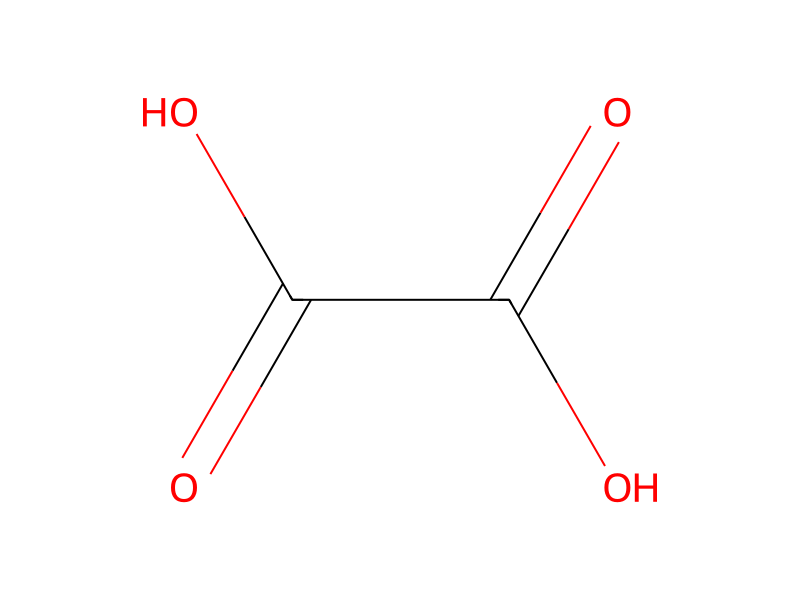
HCID 971Oxalic AcidHCID 24758Sodium hydrideHCID 516892Sodium BicarbonateHCID 30169354-Methyl-1-piperazinecarbonyl chlorideHCID 199004212-(7-Bromo-1,8-naphthyridin-2-yl)-3-hydroxy-1-isoindolinone

Produkt 1

HCID 21422068
2-(7-Bromo-1,8-naphthyridin-2-yl)-3-(4-methylpiperazin-1-yl)carbonyloxy-isoindolin-1-one
Ausbeute 8,3 %

Reagenzien, Katalysatoren, Lösungsmittel 3

HCID 702EthanolLösungsmittel2×HCID 6228DimethylformamideLösungsmittel2×HCID 6344DichloromethaneLösungsmittel

Reaktionsbedingungen

Temperatur
26 °C

Versuchsvorschrift

The procedure described in Example 4 is followed but starting with 2-(7-bromo-1,8-naphthyridin-2-yl)-3-hydroxy-isoindolin-1-one (8 g.) in anhydrous dimethylformamide (240 cc.), sodium hydride (50% dispersion in mineral oil) (1.2 g.) and 1-chlorocarbonyl-4-methylpiperazine (4.1 g.) in anhydrous dimethylformamide (40 cc.). After stirring at 26° C. for 18 hours, the reaction mixture is poured into ice-water (1,500 cc.). The insoluble matter (7.3 g.) is filtered off and dissolved in a mixture (73 cc.) of methylene chloride and ethyl acetate (80-20 by volume). The solution obtained is passed through a column of silica gel (73 g.). Elution is first carried out with a mixture (5,750 cc.) of methylene chloride and ethyl acetate (80-20 by volume); the corresponding eluates are discarded. Elution is then carried out with pure ethyl acetate (1,250 cc.) and then with a mixture (1,250 cc.) of ethyl acetate and methanol (50--50 by volume); the corresponding eluates are combined and concentrated to dryness. A residue (3 g.) is obtained which is dissolved in ethanol (90 cc.). A solution of oxalic acid (0.53 g.) in ethanol (10.5 cc.) is added to the solution obtained. The mixture is stirred for 1 hour and the precipitate which forms is filtered off and washed with ethanol (6 cc.). A product (1.8 g.), melting at 260° C., is thus obtained and is treated with a saturated solution of sodium bicarbonate (50 cc.) and methylene chloride (40 cc.). The organic layer is isolated by decanting, dried over anhydrous potassium carbonate and concentrated to dryness. A residue weighing 1.2 g. is obtained and is recrystallised from ethanol (80 cc.). 2-(7-Bromo-1,8-naphthyridin-2-yl)-3-(4-methylpiperazin-1yl)carbonyloxy-isoindolin-1-one (0.9 g.), melting at 225°-230° C., is thus obtained.

Aufarbeitung

  1. filtrationThe insoluble matter (7.3 g.) is filtered off
  2. dissolutiondissolved in a mixture (73 cc.) of methylene chloride and ethyl acetate (80-20 by volume)
  3. customThe solution obtained
  4. washElution
  5. washElution
  6. concentrationconcentrated to dryness
  7. customA residue (3 g.) is obtained which
  8. customobtained
  9. stirringThe mixture is stirred for 1 hour
  10. filtrationthe precipitate which forms is filtered off
  11. washwashed with ethanol (6 cc.)
  12. customA product (1.8 g.), melting at 260° C., is thus obtained
  13. customThe organic layer is isolated
  14. customby decanting
  15. dry with materialdried over anhydrous potassium carbonate
  16. concentrationconcentrated to dryness
  17. customis obtained
  18. customis recrystallised from ethanol (80 cc.)

Quellen und Nachweise

ORD-Eintrag
ord-f6ede0c4444047c1b7f684677621cdb4
Quelldatensatz
uspto-grants-1977_07
DOI
10.6084/m9.figshare.5104873.v1
Patentnummer
US04038391

Notizen zur Reaktion

Auf dieser SeiteKomponentenReaktionsbedingungenVersuchsvorschriftAufarbeitungQuellen und NachweiseNotizen zur Reaktion




