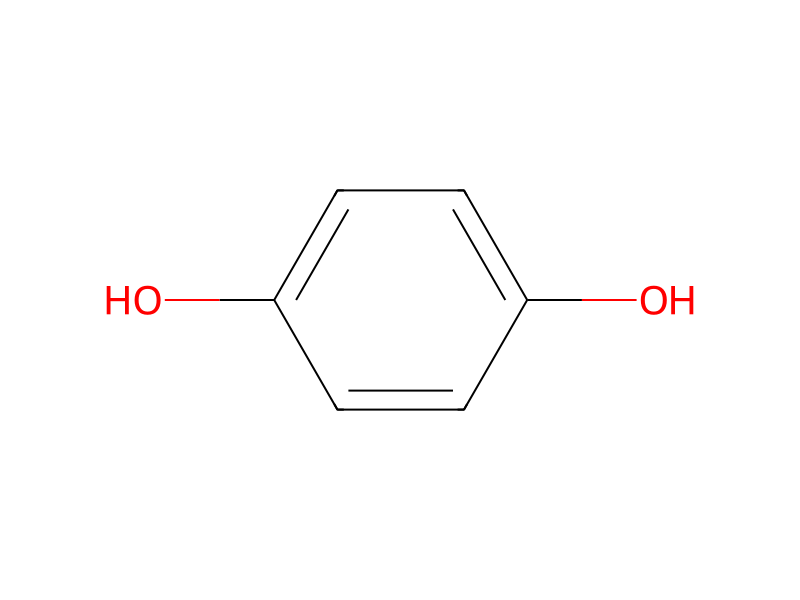
To a solution prepared by dissolving 2.8 g of hydroquinone in 20 ml of N,N-dimethylformamide, 1.39 g of sodium hydride (60% oil-based) was added, slowly, with stirring under ice cooling. After completion of the generation of hydrogen gas from the reaction solution, a solution prepared by dissolving 5 g of 2,3-dichloro-5-trifluoromethylpyridine in 10 ml of N,N-dimethylformamide was added dropwise. After stirring at room temperature for 3 hours, the reaction solution was poured into ice-water, and extracted twice with 200 ml of diethyl ether. Then, the ether layers were combined, washed with water, dried over anhydrous magnesium sulfate and then concentrated to give a crude product. This crude product was subjected to silica gel chromatography to give 2.88 g of 4-(3-chloro-5-trifluoromethyl-2-pyridyloxy)phenol (yield, 43%).