Reaktionsgleichung

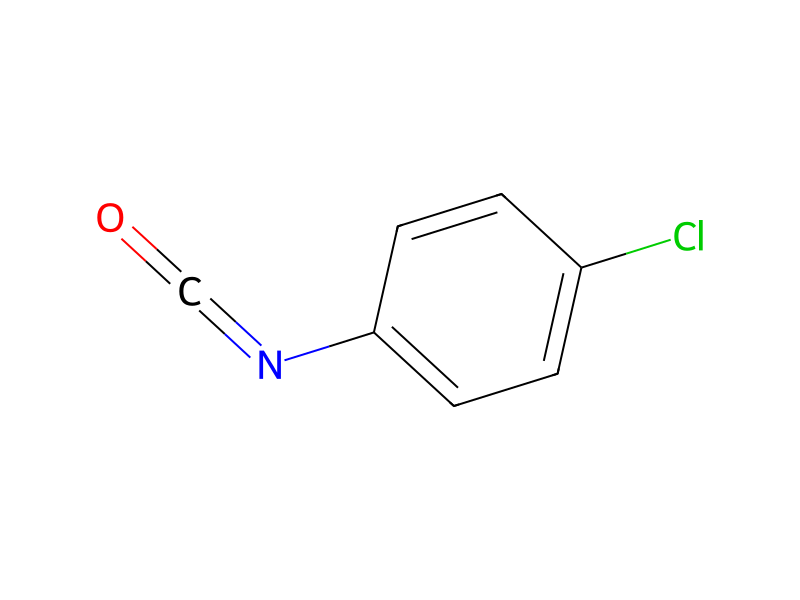
[Cl:1][C:2]1[CH:3]=[N:4][CH:5]=[C:6]([Cl:11])[C:7]=1[C:8]([NH2:10])=[O:9].[Cl:12][C:13]1[CH:18]=[CH:17][C:16]([N:19]=[C:20]=[O:21])=[CH:15][CH:14]=1>C1(C)C(C)=CC=CC=1>[Cl:1][C:2]1[CH:3]=[N:4][CH:5]=[C:6]([Cl:11])[C:7]=1[C:8]([NH:10][C:20]([NH:19][C:16]1[CH:17]=[CH:18][C:13]([Cl:12])=[CH:14][CH:15]=1)=[O:21])=[O:9]Komponenten
Edukt 2

Produkt 1

Reagenzien, Katalysatoren, Lösungsmittel 1

Versuchsvorschrift
A reaction vessel was charged with sixty-eight grams (0.36 mole) of 3,5-dichloro-4-pyridinecarboxamide, 55.5 grams (0.36 mole) of p-chlorophenyl isocyanate, and 1200 milliliters of xylene. The solution was heated under reflux with stirring for three hours. A small amount of impurity was removed by filtering the hot reaction mixture. On cooling in an ice water bath, a solid precipitated. The precipitated product was collected by suction filtration, washed with cold xylene and dried in a vacuum oven at about 70° C. The dried crude product was purified by recrystallization from 90 percent aqueous acetic acid. The yield was 81 grams (66 percent of theoretical) of white needles melting at 225°-227° C. Nuclear magnetic resonance spectral data confirmed the structure as being ##STR12##
Aufarbeitung
- temperatureThe solution was heated
- temperatureunder reflux
- customA small amount of impurity was removed
- filtrationby filtering the hot reaction mixture
- temperatureOn cooling in an ice water bath
- customa solid precipitated
- filtrationThe precipitated product was collected by suction filtration
- washwashed with cold xylene
- customdried in a vacuum oven at about 70° C
- customThe dried crude product
- customwas purified by recrystallization from 90 percent aqueous acetic acid
Quellen und Nachweise
- ORD-Eintrag
- ord-2f12c5c348974c2395d0688146a80d43
- Quelldatensatz
- uspto-grants-1979_04
- Patentnummer
- US04148902
Verknüpfte Notizen
Wird geladen…