StartseiteMCPWorkbenchSkills
StartseiteWorkbenchBenachrichtigungenMein Bereich
llms.txt · MCP-AnleitungDatenschutz · Nutzungsbedingungen · Supportv1.8.3
  1. Startseite
  2. /Reaktion

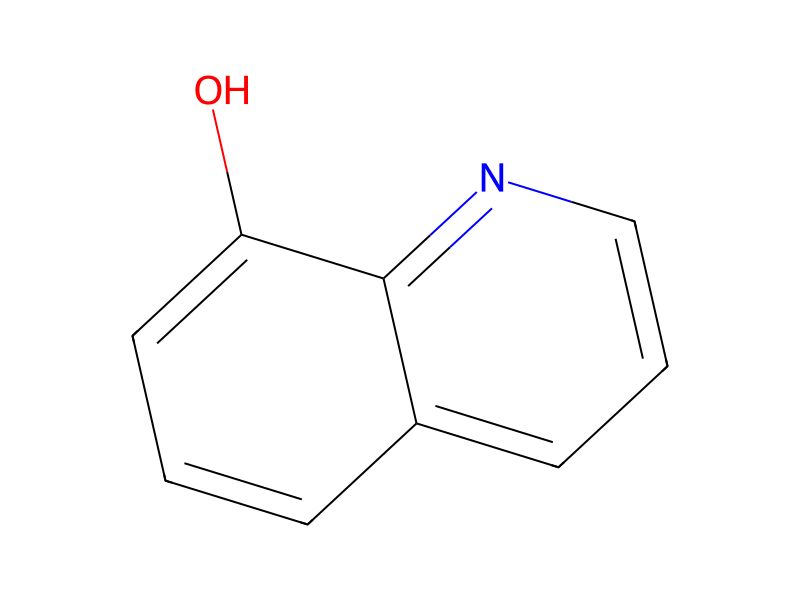
8-Hydroxyquinoline → 8-Hydroxyquinoline N-oxide

HRID 263961
Drucken

Reaktionsgleichung

Reaktionsgleichung von HRID 263961
[OH:1][C:2]1[CH:3]=[CH:4][CH:5]=[C:6]2[C:11]=1[N:10]=[CH:9][CH:8]=[CH:7]2.ClC1C=CC=C(C(OO)=[O:20])C=1.C(=O)(O)[O-].[Na+]>ClCCl>[OH:1][C:2]1[CH:3]=[CH:4][CH:5]=[C:6]2[C:11]=1[N+:10]([O-:20])=[CH:9][CH:8]=[CH:7]2
KomponentenVersuchsvorschriftAufarbeitungQuellen und NachweiseNotizen zur Reaktion

Komponenten

5

Edukt 3

HCID 19238-HydroxyquinolineHCID 70297m-Chloroperbenzoic acidHCID 516892Sodium Bicarbonate

Produkt 1

HCID 143128-Hydroxyquinoline N-oxideAusbeute 83,1 %

Reagenzien, Katalysatoren, Lösungsmittel 1

HCID 6344DichloromethaneLösungsmittel

Versuchsvorschrift

To a solution of 8-hydroxyquinoline (1.45 g, 10 mmol) in dichloromethane (50 ml) was added 3-chloroperbenzoic acid (MCPBA) (1.24 g, 13 mmol). The mixture was stirred at room temperature for 10 min, poured into 1.0N sodium bicarbonate (100 ml), and then extracted with dichloromethane (3×50 ml). The extract was washed with water, dried over magnesium sulfate, and evaporated to give a brown solid which was crystallized from dichloromethane and diethyl ether affording 8-Hydroxyquinoline 1-oxide (5a) (1.34 g, 83%) as yellow needle crystals. mp: 132°-133° C.; 1H-NMR (CDCl3): δ7.04-8.28 (m, 6H, Ar--H), 15.02 (br s, 1H, OH).

Aufarbeitung

  1. extractionextracted with dichloromethane (3×50 ml)
  2. washThe extract was washed with water
  3. dry with materialdried over magnesium sulfate
  4. customevaporated
  5. customto give a brown solid which
  6. customwas crystallized from dichloromethane and diethyl ether

Quellen und Nachweise

ORD-Eintrag
ord-d3827eabc9ee43c7b0f32b2abf17d839
Quelldatensatz
uspto-grants-1997_07
DOI
10.6084/m9.figshare.5104873.v1
Patentnummer
US05646164

Notizen zur Reaktion

Auf dieser SeiteKomponentenVersuchsvorschriftAufarbeitungQuellen und NachweiseNotizen zur Reaktion