Reaktionsgleichung
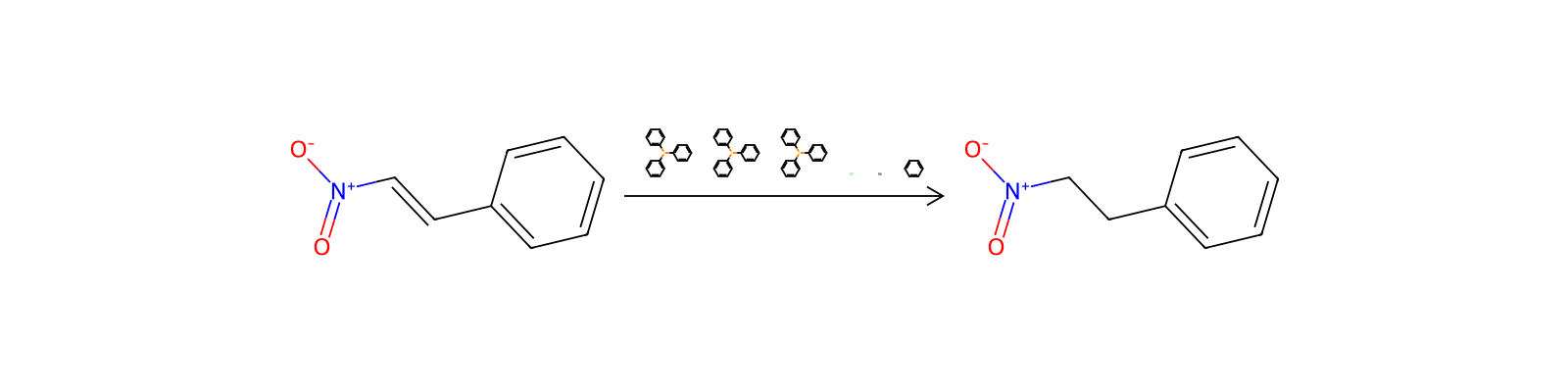
[N+:1](/[CH:4]=[CH:5]/[C:6]1[CH:11]=[CH:10][CH:9]=[CH:8][CH:7]=1)([O-:3])=[O:2]>C1C=CC(P(C2C=CC=CC=2)C2C=CC=CC=2)=CC=1.C1C=CC(P(C2C=CC=CC=2)C2C=CC=CC=2)=CC=1.C1C=CC(P(C2C=CC=CC=2)C2C=CC=CC=2)=CC=1.[Cl-].[Rh].C1C=CC=CC=1>[C:6]1([CH2:5][CH2:4][N+:1]([O-:3])=[O:2])[CH:11]=[CH:10][CH:9]=[CH:8][CH:7]=1Komponenten
4


Reagenzien, Katalysatoren, Lösungsmittel 2

Versuchsvorschrift
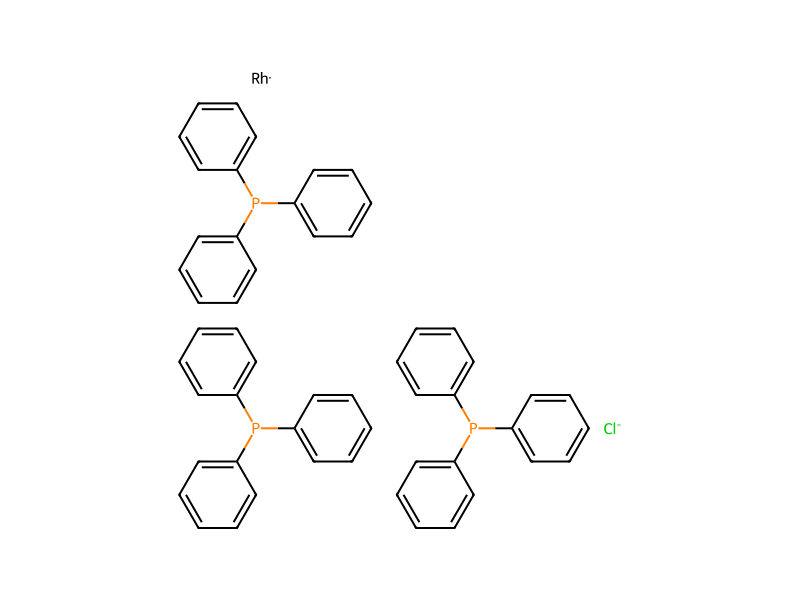
A mixture of (trans)-β-Nitrostyrene (50.0 g, 0.335 mol), tris(triphenylphosphine)rhodium(I) chloride (10.7 g) and benzene (500 mL) at 50° C. was shaken under hydrogen at 50 psi for 14 hours and allowed to cool. The solution was rotoevaporated, suspended in petroleum ether-ether (9:1), and gravity filtered through a plug of fluorisil (80 g)/silica gel (300 g). The filtrate was rotoevaporated to a pale yellow oil; yield (49.5 g, 98%).
Aufarbeitung
- temperatureto cool
- filtrationgravity filtered through a plug of fluorisil (80 g)/silica gel (300 g)
- customyield (49.5 g, 98%)
Quellen und Nachweise
- ORD-Eintrag
- ord-b09f44ec642440b1b9b4604fb487765c
- Quelldatensatz
- uspto-grants-1997_07
- Patentnummer
- US05646170
Verknüpfte Notizen
Wird geladen…