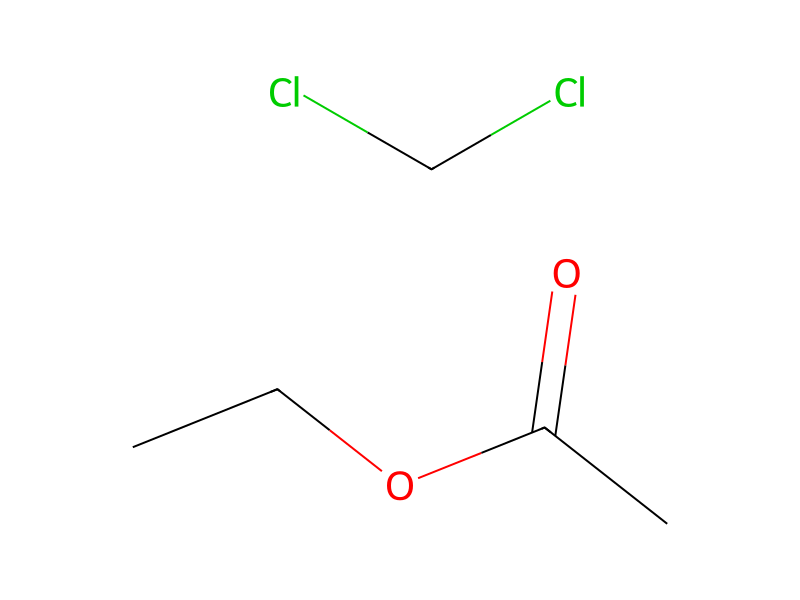
Cl.[C:2]1([C:8]#[C:9][C:10]2[S:14][C:13]([C:15]3[N:16]=[C:17]4[CH:22]=[N:21][CH:20]=[CH:19][N:18]4[C:23]=3[NH2:24])=[CH:12][CH:11]=2)[CH:7]=[CH:6][CH:5]=[CH:4][CH:3]=1.[H-].[Na+].[CH2:27](Br)[CH3:28].CC(=O)OCC.C(Cl)Cl>CN(C=O)C>[CH2:27]([NH:24][C:23]1[N:18]2[CH:19]=[CH:20][N:21]=[CH:22][C:17]2=[N:16][C:15]=1[C:13]1[S:14][C:10]([C:9]#[C:8][C:2]2[CH:7]=[CH:6][CH:5]=[CH:4][CH:3]=2)=[CH:11][CH:12]=1)[CH3:28]395 mg (1.25 mmol) of 2-(5-phenylethynyl-thiophen-2-yl)-imidazo[1,2-a]pyrazin-3-ylamine hydrochloride (Example 83) were dissolved in DMF (8 ml). After addition of 100 mg (2.5 mmol) of sodium hydride (60% dispersion in mineral oil), the mixture was stirred at RT for 1 h. A solution of 74 μl (0.8 mmol) of ethyl bromide in DMF (2 ml) was then added dropwise. The reaction solution was stirred at RT for 16 h, quenched with water (10 ml) and extracted with EA (2×50 ml). The combined organic phases were dried over MgSO4, filtered and evaporated under a vacuum. 253 mg (0.74 mmol, 58% of theoretical) of ethyl-[2-(5-phenylethynyl-thiophen-2-yl)-imidazo[1,2-a]pyrazin-3-yl]-amine were obtained by means of column chromatography (silica gel, EA/DCM 4:1).