Chlorosuccinimide → 4,5-dichloro-7H-pyrrolo[2,3-d]pyrimidine
HRID 29886
Reaktionsgleichung

[Cl:1][C:2]1[C:3]2[C:10](C)=[CH:9][NH:8][C:4]=2[N:5]=[CH:6][N:7]=1.[Cl:12]N1C(=O)CCC1=O>ClCCl>[Cl:1][C:2]1[C:3]2[C:10]([Cl:12])=[CH:9][NH:8][C:4]=2[N:5]=[CH:6][N:7]=1Komponenten
4
Edukt 2

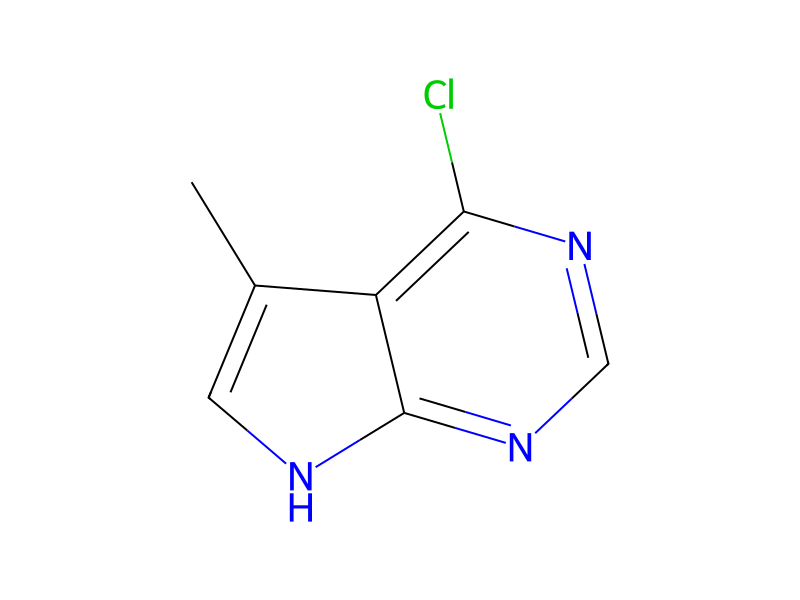
Produkt 1

Reagenzien, Katalysatoren, Lösungsmittel 1

Reaktionsbedingungen
- Temperatur
- 43 °C