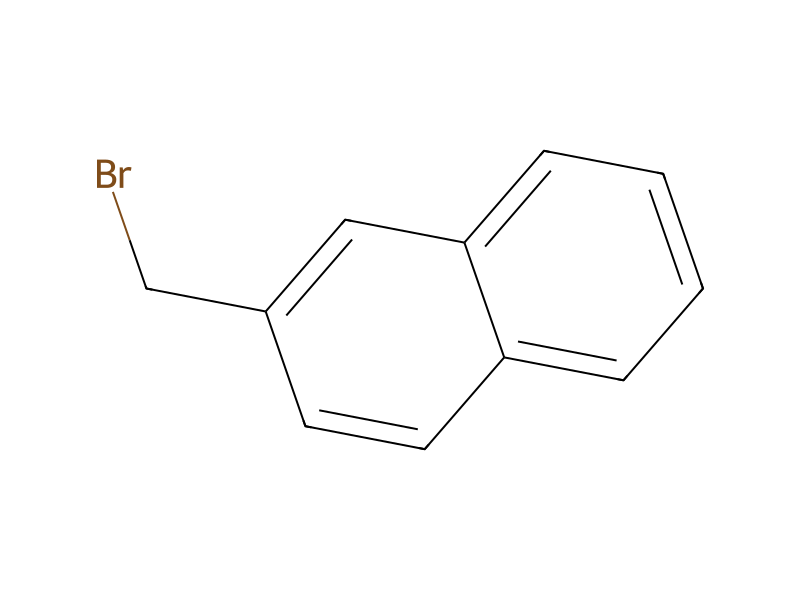
1.6 g (9.5 mmol) of N-[8-azabicyclo[3.2.1]oct-3-yl]acetamide prepared according to Dostert et al. (European Journal of Medicinal Chemistry 1984, 19 (2), 105-110) are dissolved in 45 mL of acetone, and 5.2 g of potassium carbonate and 2.5 g (11.4 mmol) of 2-(bromomethyl)naphthalene are added. The mixture is refluxed with stirring for 18 hours. After cooling, the acetone is partially evaporated off. Water is added to the residue, and the mixture is extracted with dichloromethane. The organic phase is extracted with 1N hydrochloric acid. The acidic aqueous phase obtained is basified with 1N sodium hydroxide and then extracted with dichloromethane. The extract is washed with water and with brine, dried over anhydrous sodium sulfate and then evaporated under reduced pressure. The residue obtained is filtered on silica gel (solvent: 95/5 (v/v) dichloromethane/methanol). 2.2 g of a pasty oil are obtained (84% yield).