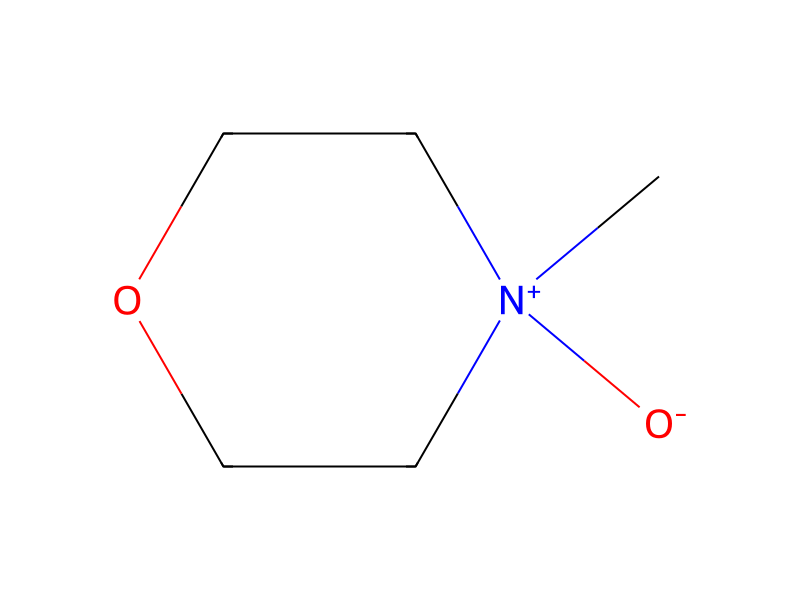
Methyl morpholine oxide → Methyl 2-chloro-3-formyl-4-methylsulfonylbenzoate
Reaktionsgleichung

[Cl:1][C:2]1[C:11]([CH2:12]Br)=[C:10]([S:14]([CH3:17])(=[O:16])=[O:15])[CH:9]=[CH:8][C:3]=1[C:4]([O:6][CH3:7])=[O:5].C[N+]1([O-])CC[O:22]CC1>C(#N)C>[Cl:1][C:2]1[C:11]([CH:12]=[O:22])=[C:10]([S:14]([CH3:17])(=[O:16])=[O:15])[CH:9]=[CH:8][C:3]=1[C:4]([O:6][CH3:7])=[O:5]Komponenten
4
Edukt 2

Produkt 1

Reagenzien, Katalysatoren, Lösungsmittel 1

Versuchsvorschrift
89.2 g (0.26 mol) of methyl 2-chloro-3-bromomethyl-4-methylsulfonylbenzoate are dissolved in 500 ml of acetonitrile and treated at room temperature with 52.0 g (0.444 mol) of N-methylmorpholine N-oxide. The batch is stirred at room temperature for 18 hours, concentrated in a rotary evaporator, taken up in dichloromethane and washed several times with water. After concentration in the rotary evaporator, 57.3 g (80% of theory) of methyl 2-chloro-3-formyl-4-methylsulfonylbenzoate having a melting point of 104-105° C. are obtained.