tert-Butyl 2-azido-7-azaspiro[3.5]nonane-7-carboxylate → tert-Butyl 2-amino-7-azaspiro(3.5)nonane-7-carboxylate
Reaktionsgleichung

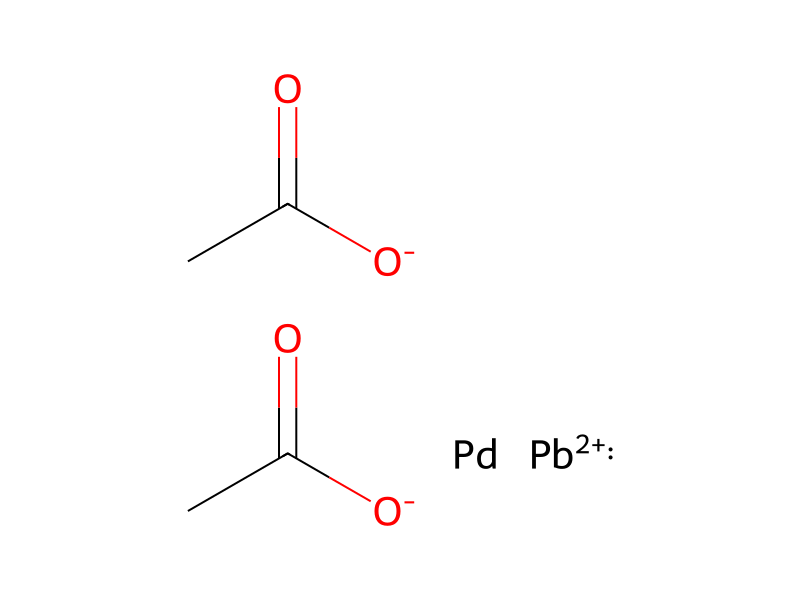
[N:1]([CH:4]1[CH2:7][C:6]2([CH2:12][CH2:11][N:10]([C:13]([O:15][C:16]([CH3:19])([CH3:18])[CH3:17])=[O:14])[CH2:9][CH2:8]2)[CH2:5]1)=[N+]=[N-]>[Pd].CC([O-])=O.CC([O-])=O.[Pb+2].C(O)C>[NH2:1][CH:4]1[CH2:7][C:6]2([CH2:12][CH2:11][N:10]([C:13]([O:15][C:16]([CH3:19])([CH3:18])[CH3:17])=[O:14])[CH2:9][CH2:8]2)[CH2:5]1Komponenten
4
Edukt 1

Produkt 1

Reagenzien, Katalysatoren, Lösungsmittel 2

Versuchsvorschrift
1.85 g (8.97 mmol) of Lindlar catalyst (PdCaCO3) are added to a solution of 4.78 g (17.95 mmol) of tert-butyl 2-azido-7-azaspiro[3.5]nonane-7-carboxylate, obtained in step 2.1., in 70 mL of ethanol. The reaction medium is placed in a Parr flask under a hydrogen atmosphere (20 psi) at room temperature for 5 hours. The resulting mixture is filtered through Celite and the filtrate is then concentrated under reduced pressure. Water and dichloromethane are added. The aqueous phase is separated out and then extracted three times with dichloromethane, and the combined organic phases are washed with saturated aqueous sodium chloride solution and dried over sodium sulfate. After evaporating off the solvent, 3.62 g of product are obtained in the form of an oil, which is used without further purification in the following step.