tert-Butyl 2-azido-6-azaspiro[3.4]octane-6-carboxylate → tert-Butyl 2-amino-6-azaspiro[3.4]octane-6-carboxylate
Reaktionsgleichung

[N:1]([CH:4]1[CH2:7][C:6]2([CH2:11][CH2:10][N:9]([C:12]([O:14][C:15]([CH3:18])([CH3:17])[CH3:16])=[O:13])[CH2:8]2)[CH2:5]1)=[N+]=[N-]>[Pd].CC([O-])=O.CC([O-])=O.[Pb+2].C(O)C>[NH2:1][CH:4]1[CH2:5][C:6]2([CH2:11][CH2:10][N:9]([C:12]([O:14][C:15]([CH3:18])([CH3:17])[CH3:16])=[O:13])[CH2:8]2)[CH2:7]1Komponenten
4
Edukt 1

Produkt 1

Reagenzien, Katalysatoren, Lösungsmittel 2
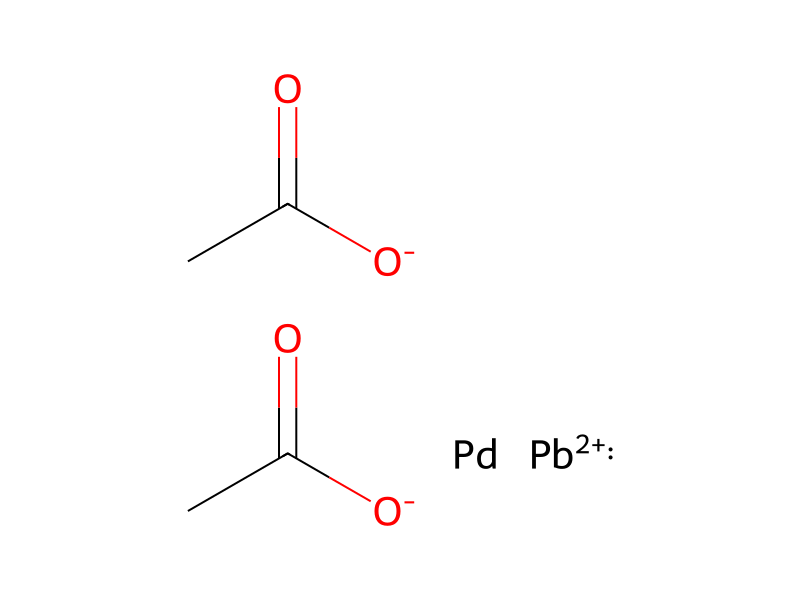

Versuchsvorschrift
1.50 g (7.27 mmol) of Lindlar catalyst (PdCaCO3) are added to a solution of 3.67 g (14.54 mmol) of tert-butyl 2-azido-6-azaspiro[3.4]octane-6-carboxylate, obtained in step 6.3., in 60 mL of ethanol. The reaction medium is placed in a Parr flask under a hydrogen atmosphere at 20 psi, at room temperature for 5 hours. The resulting mixture is filtered through Celite and the filtrate is then concentrated under reduced pressure. After evaporating off the solvent, the residue obtained is purified by chromatography on silica gel, eluting with a 95/5/0.5 mixture of dichloromethane, methanol and 28% aqueous ammonia.